

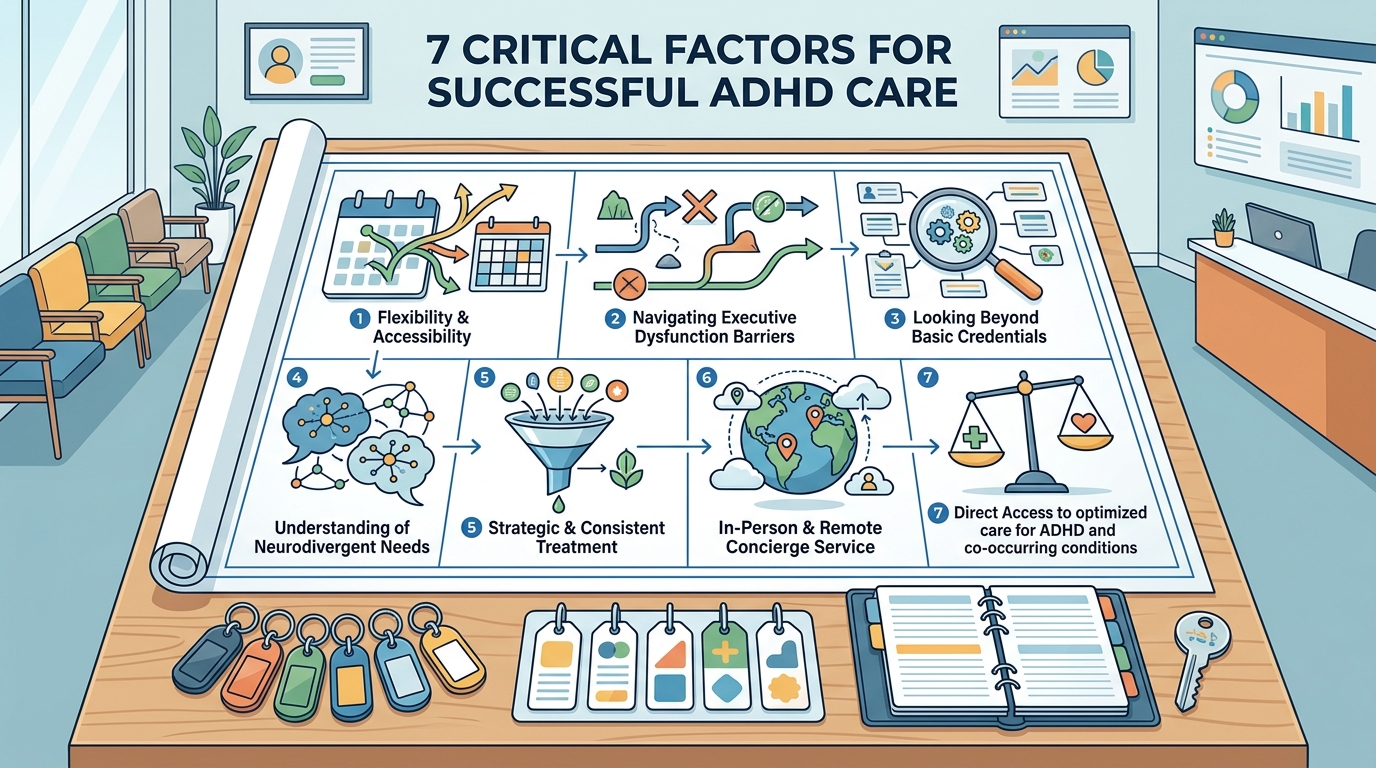
Traditional psychiatric care often fails adults with ADHD because it relies on rigid monthly visit schedules that clash with executive dysfunction. According to recent healthcare accessibility reports, nearly 60% of adults with ADHD struggle to maintain consistent treatment due to administrative friction and scheduling barriers. This gap in care leads to untreated symptoms, workplace instability, and emotional distress. Finding the right provider requires looking beyond basic credentials to evaluate how their service model aligns with your specific neurodivergent needs.
Understanding Concierge vs. Traditional Models
The most significant decision you will make is choosing between traditional insurance-based care and a concierge psychiatric model. Traditional care often requires you to navigate complex insurance networks, wait weeks for appointments, and face high copays for every visit. For busy professionals, this administrative burden can be overwhelming and counterproductive to treatment.
Concierge psychiatric care offers a different approach. It provides direct access to your provider, flexible scheduling, and unlimited medication visits for a flat annual fee. This model replaces traditional visit-based care with a patient-centered model, reducing scheduling burdens while improving access. According to industry analysis of private practice psychiatry, patients in concierge models report significantly higher satisfaction rates due to reduced wait times and direct provider communication.
When evaluating this option, consider whether you value predictability and direct access over insurance reimbursement. Many high-performing professionals choose this path to eliminate the friction of traditional healthcare systems. You can explore optimized care options that prioritize your time and mental bandwidth.
Evaluating Provider Expertise and Background
Not all psychiatrists specialize in adult ADHD. You must verify that your provider has specific training and experience in treating adults with neurodevelopmental disorders. ADHD is a condition that begins in childhood, so an effective provider will assess your developmental history, not just your current symptoms.
Look for providers who are board-certified and have a track record of working with high-performing adults. For example, Liz Moore, PMHNP at SF Psychiatric is a UCSF graduate and board-certified Psychiatric Nurse Practitioner who has been practicing since 2010. Her background in treating adults with ADHD ensures that you receive care from someone who understands the unique challenges of executive dysfunction in professional settings.
Ask potential providers about their diagnostic methodology. Do they conduct thorough psychiatric evaluations? Do they assess for co-occurring conditions like anxiety or depression? A comprehensive assessment is critical for accurate diagnosis and effective treatment planning.
Accessibility and Communication Channels
For individuals with ADHD, accessibility is not just about location; it is about communication. Traditional psychiatric care often leaves patients waiting days for a response to a simple question. This delay can lead to medication lapses or untreated anxiety.
Look for providers who offer direct communication channels. This might include text messaging, phone calls, or secure email. Direct access allows you to address urgent issues, such as side effects or pharmacy problems, without waiting for the next scheduled appointment. According to patient satisfaction surveys, direct provider access is a top factor in treatment adherence for ADHD patients.
Consider the flexibility of the scheduling system. Can you schedule last-minute appointments? Can you cancel or reschedule without penalties? These features are essential for managing the unpredictable nature of ADHD. You can contact SF Psychiatric to discuss how their flexible scheduling works for new patients.
Medication Management and Shortage Navigation
Medication management for ADHD often involves stimulants, which are subject to frequent shortages and strict regulatory controls. A good psychiatrist will not only prescribe medication but also help you navigate these challenges. This includes finding alternative medications when first-line treatments are unavailable.
Research indicates that ninety-five percent of patients respond equally well to a stimulant in the same family, unlike many other classes of psych meds. This means that if your preferred medication is out of stock, your provider can quickly switch you to a comparable alternative without losing therapeutic benefit. Providers who partner directly with pharmacies can often resolve these issues more rapidly than those relying solely on insurance networks.
Additionally, consider whether the provider offers genetic testing. Genetic testing can help identify the best medications for your DNA, potentially reducing the trial-and-error period. While lab processing fees may apply, this personalized approach can lead to faster symptom relief. Learn more about resources for medication management to understand your options.
Telehealth Availability and Geographic Reach
The availability of telehealth services has expanded access to specialized ADHD care. However, not all providers offer remote options, and licensing restrictions vary by state. If you are relocating or traveling, ensure your provider is licensed in your new location.
For example, SF Psychiatric provides care for residents of California, New York, and Washington states. This geographic flexibility is crucial for tech professionals who frequently move between major hubs like San Francisco, Seattle, and New York City. According to recent healthcare trends, the extension of telehealth laws has allowed providers to maintain continuity of care for patients who relocate.
Even if telehealth is available, consider the benefits of in-person visits. Attending in person can make starting care at a new pharmacy smoother, as pharmacists often ask whether an initial visit was in-person or via telehealth. Some locations have their own policies mandating in-person visits, though this is not a federal law. You can access crisis resources if you are experiencing severe distress during your search.
Financial Structures and Insurance Compatibility
Understanding the financial structure of psychiatric care is essential. Traditional care often involves copays, deductibles, and prior authorizations. Concierge care typically involves a flat annual fee, which can be more predictable and cost-effective for those who need frequent support.
Some providers accept insurance, while others operate on a cash-pay basis. If you have insurance, verify whether your plan covers the services you need. For example, some plans may cover genetic testing or psychotherapy referrals, while others may not. You can use an FSA or HSA card for concierge care, which can help offset the cost. Check with your provider to ensure they provide the necessary paperwork for reimbursement.
Compare the total cost of care over a year. If you need multiple medication adjustments or urgent visits, a concierge model may be more economical than paying per visit with insurance. Review the frequently asked questions to understand the financial implications of each plan.
Comprehensive Care and Co-Occurring Conditions
ADHD rarely exists in isolation. Many adults with ADHD also experience anxiety, depression, or insomnia. A good psychiatrist will assess for these co-occurring conditions and provide integrated treatment. This holistic approach ensures that all aspects of your mental health are addressed.
Look for providers who offer referrals to top coaches, therapists, and support groups. A multidisciplinary team can provide the comprehensive support needed for long-term success. According to clinical studies, combined treatment with medication and therapy yields the best outcomes for adults with ADHD.
Consider the provider's approach to psychotherapy. Some psychiatrists offer weekly psychotherapy as part of their concierge plan. This can be a valuable addition to medication management, helping you develop coping strategies and lifestyle adjustments. Explore the free ADHD screening to begin your evaluation process.
Key Takeaways
- Service Model Matters: Concierge models offer direct access and flexible scheduling, which are critical for ADHD patients.
- Provider Expertise: Choose a board-certified provider with specific experience in adult ADHD and executive dysfunction.
- Communication: Direct communication channels like text and phone reduce administrative friction and improve adherence.
- Medication Support: Providers who navigate shortages and offer genetic testing can accelerate effective treatment.
- Geographic Flexibility: Telehealth and multi-state licensing ensure continuity of care during relocations.
- Financial Clarity: Compare annual fees versus insurance copays to determine the most cost-effective option for your needs.
- Comprehensive Care: Integrated treatment for co-occurring conditions leads to better long-term outcomes.
Frequently Asked Questions
What is the difference between a psychiatrist and a psychologist for ADHD diagnosis?
A psychiatrist is a medical doctor who can prescribe medication and provide psychiatric evaluations. A psychologist provides psychological testing and therapy but cannot prescribe medication. For accommodations at work or school, psychological testing is often required to substantiate needs.
Can I stay on my current medications if I switch providers?
Yes, many patients relocate and continue their existing regimens. Uploading a diagnosis letter or noting the name of your former provider helps ensure a smooth transition. Providers can maintain stable medications while adjusting as needed.
Do I have to come in-person for my first visit?
No, telehealth is available for initial visits in many states. However, attending in person can make starting care at a new pharmacy smoother. Some pharmacies may require an in-person visit, but this is not a federal law.
What if I have never been diagnosed with ADHD?
A thorough psychiatric evaluation will determine whether ADHD is an accurate diagnosis. The provider will assess your childhood and adult experiences to confirm the diagnosis and rule out other conditions.
Can I use an FSA or HSA card for concierge care?
Yes, you can use an FSA or HSA card for concierge care. You should inform your provider when you meet so they can provide the necessary paperwork for reimbursement.
How quickly can I get an appointment?
Concierge models often offer openings within one week. This rapid access is designed to reduce the wait times associated with traditional psychiatric care.
What if I am not sure I want to try medications?
You may be better served by first working with an ADHD-focused psychotherapist or coach. However, you can still meet with a psychiatrist to discuss non-stimulant options and answer any questions you have.
Take the Next Step in Your ADHD Care
Finding the right psychiatrist is a critical step toward managing your ADHD effectively. By evaluating providers based on expertise, accessibility, and service model, you can find a partner who supports your unique needs. SF Psychiatric offers a concierge model designed for busy professionals, providing direct access, flexible scheduling, and comprehensive care. Schedule your initial visit online today to begin your journey toward optimized mental health.