

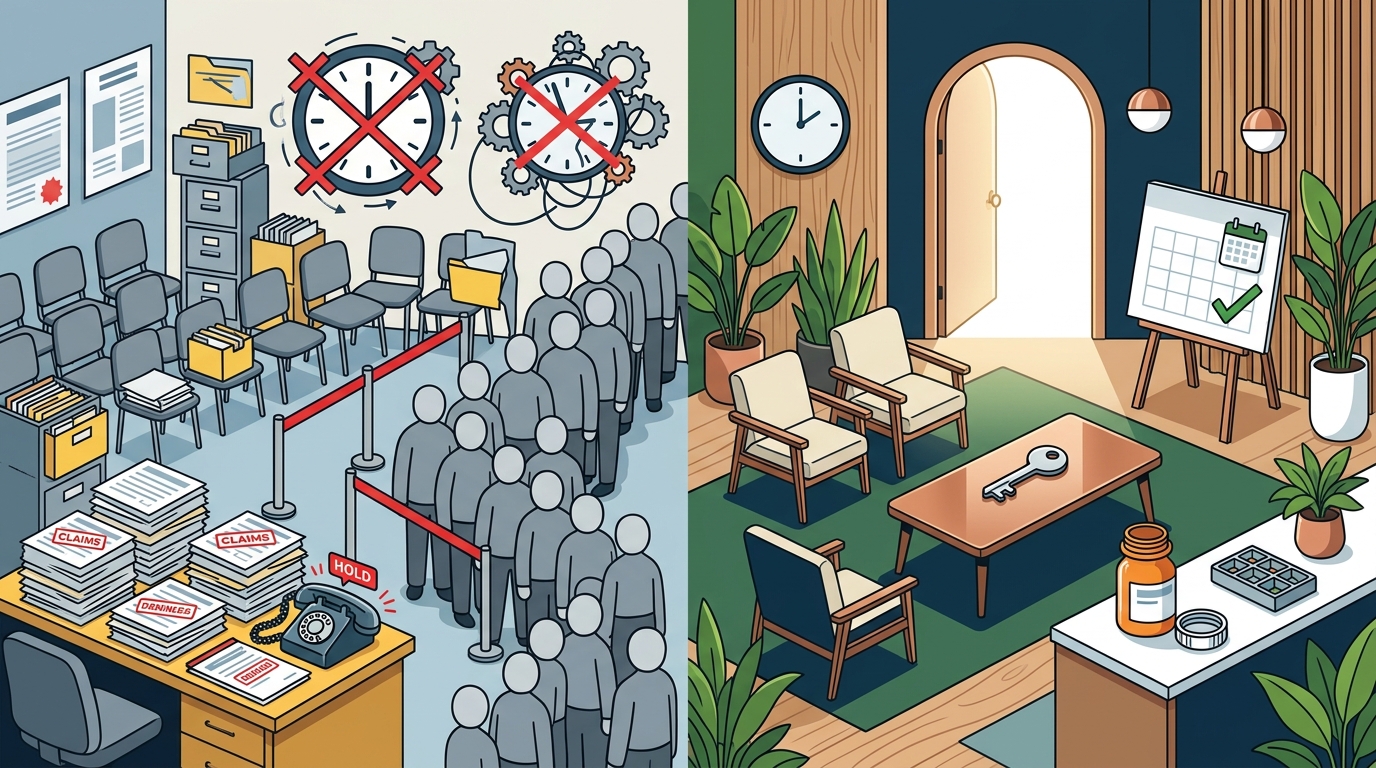
Traditional psychiatric care often leaves patients with ADHD feeling like a number in a crowded queue, where missed appointments and insurance hurdles disrupt treatment continuity. In contrast, concierge psychiatry offers a direct, patient-centered model designed to eliminate these systemic barriers. According to recent industry analyses, the shift toward direct-access mental health services has grown significantly, with many professionals seeking care that accommodates their demanding schedules rather than forcing them to fit into rigid clinic hours. This article explores how these two models differ in access, cost, and clinical support for adults managing ADHD.
Access and Scheduling Flexibility
The most immediate difference between traditional and concierge care lies in how appointments are managed. Traditional psychiatric care typically operates on a fee-for-service or insurance-based model. This often requires patients to wait weeks for an initial intake and then adhere to strict monthly or quarterly follow-up schedules. For individuals with ADHD, this rigidity can be detrimental. Missing a single appointment can lead to gaps in medication supply or a lapse in therapeutic support, which may trigger a relapse in symptoms.
Concierge psychiatry replaces this visit-based structure with an annual membership model. This approach prioritizes flexibility. Patients can schedule last-minute appointments without incurring penalty fees. This is critical for ADHD patients who may experience sudden crises or urgent medication needs. The ability to reschedule or cancel without financial consequence reduces the anxiety associated with managing a chronic condition. It allows the patient to take control of their care timeline rather than being dictated by a clinic's availability.
At SF Psychiatric, this model is designed specifically for busy professionals. The system allows patients to self-schedule online, ensuring that care is accessible when it is needed most. This direct access reduces the administrative burden that often overwhelms individuals with executive function challenges.
Cost Structures and Financial Models
Understanding the financial difference is essential for making an informed decision. Traditional care relies on insurance copays, deductibles, and visit fees. While this may seem cheaper upfront, the cumulative cost of frequent visits, lab work, and potential emergency room visits for medication crises can be high. Furthermore, insurance coverage for psychiatric care is often limited, requiring prior authorizations that delay treatment.
Concierge psychiatry utilizes a flat annual fee. This model provides predictability and eliminates surprise costs. For example, SF Psychiatric offers an ADHD-tailored concierge plan starting at $1,999 per year. This fee covers unlimited medication management visits, both online and in-person. It also includes support for pharmacy issues and prescription renewals for twelve months. This structure is particularly beneficial for those who require frequent adjustments to their medication regimen.
Additionally, concierge plans often accept Health Savings Accounts (HSA) and Flexible Spending Accounts (FSA). This allows patients to use pre-tax dollars to cover their mental health care, effectively reducing the net cost of the service. The value proposition shifts from paying per visit to investing in comprehensive, ongoing support.
Medication Management and Supply Chain
Medication management is a core component of ADHD treatment. Traditional care often struggles with the complexities of the pharmaceutical supply chain, particularly for controlled substances like stimulants. Patients frequently face shortages, requiring them to call multiple pharmacies or wait for insurance approvals. This process is time-consuming and stressful, often leading to treatment interruptions.
Concierge psychiatry addresses these challenges proactively. Providers in this model often partner directly with pharmacies to resolve supply issues quickly. They provide timely solutions for shortage problems, ensuring that patients maintain their medication continuity. According to clinical data, ninety-five percent of patients respond equally well to a stimulant in the same family, allowing providers to offer effective alternatives when specific brands are unavailable.
Furthermore, concierge providers may offer genetic testing to identify the most effective medications for a patient's DNA. This personalized approach reduces the trial-and-error period often associated with traditional prescribing. At SF Psychiatric, this level of care includes direct assistance with insurance friction and pharmacy navigation, ensuring that the patient receives their medication without unnecessary delays.
Communication Channels and Responsiveness
In traditional care, communication is often limited to the appointment itself. Patients may struggle to reach their provider between visits, leading to feelings of isolation or uncertainty. If a side effect occurs or a question arises, the patient must wait for the next scheduled appointment or navigate a complex patient portal.
Concierge psychiatry emphasizes direct communication. Patients typically have access to their provider via text, phone, or email. This direct line allows for rapid responses to urgent issues. For example, if a patient experiences a sudden increase in anxiety or a medication side effect, they can contact their provider immediately. This responsiveness is crucial for maintaining stability in ADHD management.
The ability to communicate directly with a provider also fosters a stronger therapeutic relationship. Patients feel heard and supported, which can improve treatment adherence and outcomes. SF Psychiatric highlights this benefit by offering direct messaging with providers, ensuring that patients receive world-class service and rapid responses.
Privacy and Discretion
Privacy is a significant concern for high-performing professionals seeking psychiatric care. Traditional clinics are often located in visible medical buildings, with waiting rooms full of other patients. This lack of discretion can be uncomfortable for those who wish to keep their mental health care private.
Concierge psychiatry often operates in discreet locations. SF Psychiatric maintains a physical office that is not labeled as a psychiatric practice. This ensures that patients can receive care without being identified by colleagues or acquaintances. The high-level privacy offered by concierge services is a key differentiator for those in sensitive professional roles.
Additionally, the one-on-one nature of concierge care eliminates the waiting room experience entirely. Patients are seen promptly, reducing the time spent in public spaces and enhancing the overall comfort of the care process.
Service Comparison Summary
The following table summarizes the key differences between traditional and concierge psychiatric care for ADHD.
| Feature | Traditional Psychiatric Care | Concierge Psychiatry |
|---|---|---|
| Scheduling | Fixed appointments, long wait times | Flexible, last-minute, self-scheduling |
| Cost Model | Per-visit copay, insurance dependent | Flat annual fee (e.g., $1,999/yr) |
| Medication Support | Standard pharmacy referrals | Direct pharmacy partnership, shortage solutions |
| Communication | Limited to office visits | Direct text, phone, and email access |
| Privacy | Public clinic setting | Discreet, private office locations |
| Personalization | Standard treatment protocols | Genetic testing, tailored care plans |
Key Takeaways
- Cost Predictability: Concierge plans like those at SF Psychiatric offer a flat annual fee, eliminating surprise costs associated with traditional visit-based care.
- Unlimited Visits: Patients receive unlimited medication management visits, both online and in-person, without additional fees.
- Medication Continuity: Concierge providers actively resolve pharmacy shortages and insurance friction, ensuring consistent medication supply.
- Direct Access: Direct communication via text and phone allows for rapid responses to urgent mental health needs.
- Privacy: Discreet office locations and private appointments protect the confidentiality of high-performing professionals.
- Personalized Care: Options for genetic testing and tailored treatment plans improve medication efficacy and reduce trial-and-error.
- Flexibility: The ability to cancel or reschedule without penalties accommodates the unpredictable nature of ADHD.
Frequently Asked Questions
What is the primary difference between concierge and traditional psychiatry?
Concierge psychiatry operates on an annual membership model with direct provider access, while traditional care relies on insurance-based, per-visit payments with limited communication channels.
Is concierge psychiatry covered by insurance?
While the annual fee is typically paid out-of-pocket, many concierge services accept HSA and FSA cards. Individual visit fees may also be reimbursable depending on your insurance policy.
How does concierge care help with ADHD medication shortages?
Concierge providers often partner directly with pharmacies to find alternative medications or resolve supply issues quickly, ensuring patients do not run out of essential prescriptions.
Can I receive concierge psychiatric care remotely?
Yes, many concierge services, including SF Psychiatric, offer telehealth options for patients in Seattle, New York City, and other locations.
What is the cost of an ADHD concierge plan?
Plans vary by provider, but SF Psychiatric's ADHD plan starts at $1,999 per year, covering unlimited visits and comprehensive support.
Do I need to be a new patient to join a concierge plan?
No, concierge plans are available for both new patients and those seeking a new provider. They are also suitable for individuals who are stable on medications but need more flexible access.
How quickly can I get an appointment with a concierge provider?
Concierge models prioritize rapid access. Openings are often available within one week, and last-minute scheduling is accommodated without penalty.
Take Control of Your ADHD Care Today
Traditional psychiatric care often fails to meet the unique needs of adults with ADHD. Concierge psychiatry offers a superior alternative with flexible scheduling, direct provider access, and comprehensive medication support. If you are ready to experience responsive, high-quality care, schedule your initial visit with SF Psychiatric today. Take the first step toward a more stable and supported future.