

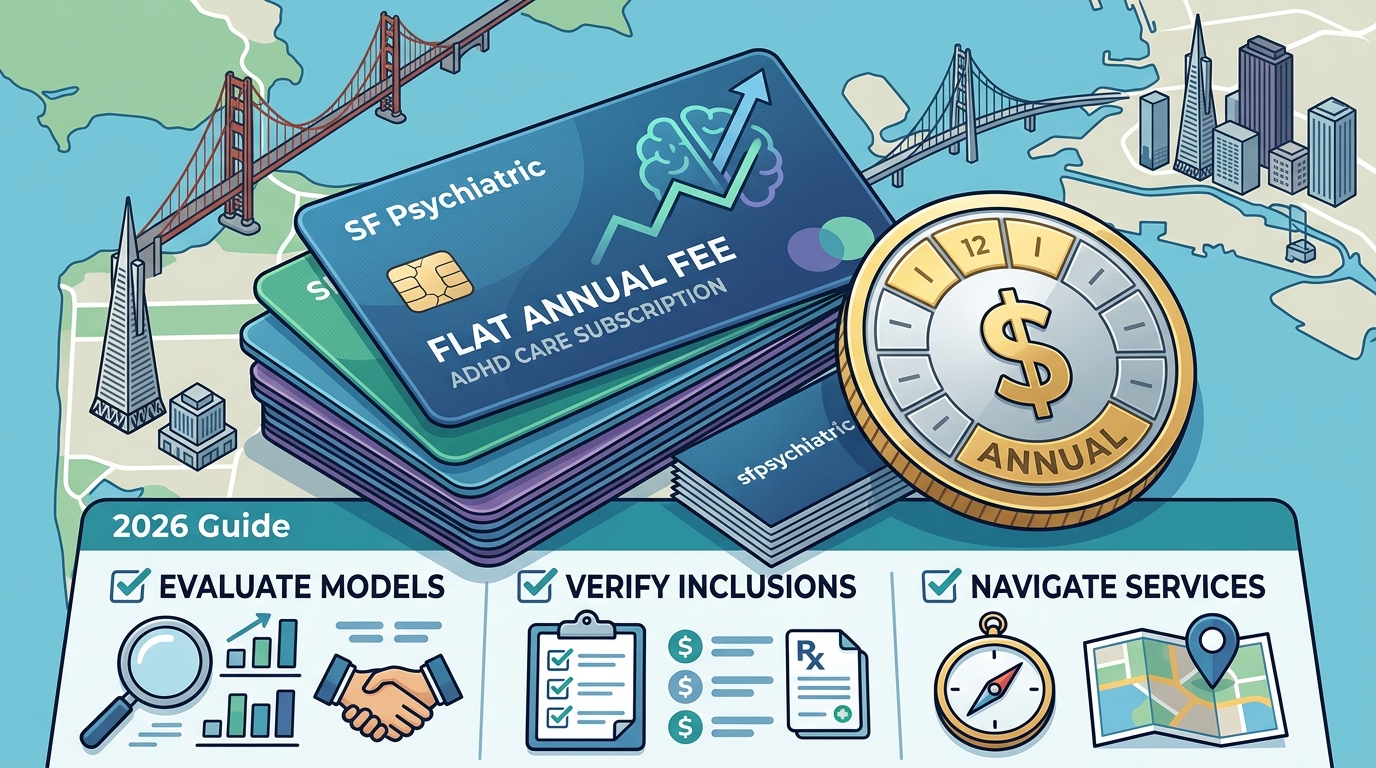
Busy professionals in San Francisco can access ADHD care with a flat annual fee through concierge psychiatric practices like SF Psychiatric. This model replaces unpredictable monthly insurance visits with a predictable subscription for continuous support. This guide covers how to evaluate, verify, and navigate these services effectively.
How to Choose a Provider
Choosing a psychiatric provider for ADHD requires looking beyond generic marketing. A high-quality concierge practice prioritizes continuity of care and responsive communication. You should look for a team that understands the specific regulatory hurdles of controlled substance management. The provider must be transparent about their approach to telehealth and in-person requirements.
Continuity and Responsiveness
ADHD medication management is not a one-time event. It requires ongoing adjustment and monitoring. A good provider offers direct messaging or rapid response times for prescription issues. This ensures that if a pharmacy has a stock shortage, you have a professional advocate ready to act.
Specialization in Adult ADHD
Not all psychiatrists specialize in adult ADHD. Many treat a broad range of conditions, which can lead to a lack of depth in executive function support. Look for providers who explicitly state their focus on adult professionals. This specialization often correlates with a better understanding of workplace accommodations and cognitive strategies.
Questions to Ask Before Committing
Before signing a contract, you must clarify the operational details of the service. These questions help you determine if the provider's workflow aligns with your professional schedule and medical needs.
Communication Protocols
Ask how you will communicate with your provider between visits. Does the practice use a secure messaging platform? What is the standard response time for non-urgent questions? Knowing this upfront prevents frustration when you need a refill or have a side effect question.
Prescription and Pharmacy Policies
Inquire about their policy on controlled substances. Do they require in-person visits for initial prescriptions? How do they handle pharmacy shortages? Understanding their specific protocols for Schedule II medications is critical for maintaining your treatment stability.
Verifying Credentials and Claims
Medical credentials are public record, and you should verify them independently. This step protects you from unlicensed practitioners or those with disciplinary history.
State Board Verification
Check the provider's license with the California Medical Board or the California Board of Registered Nursing. Verify that the license is active and in good standing. This confirms they are legally permitted to practice in the state.
Board Certification
Board certification indicates that a provider has completed additional training and passed rigorous exams. For psychiatric nurse practitioners, look for PMHNP certification. For physicians, look for board certification in psychiatry. These credentials signal a higher standard of specialized training.
The Care Process and Timeline
Understanding the sequence of events helps you plan your time effectively. The process typically moves from evaluation to stabilization and then to maintenance.
Initial Evaluation
The first step is a comprehensive psychiatric evaluation. This involves a detailed history of your symptoms, childhood experiences, and current challenges. This visit is often in-person to establish a baseline and satisfy pharmacy requirements for new patients.
Medication Management
Following the evaluation, your provider will discuss treatment options. This may include stimulants, non-stimulants, or a combination. The initial phase involves monitoring your response and adjusting doses as needed. This phase requires more frequent contact than the maintenance phase.
Understanding the Cost Structure
Concierge psychiatry operates on a subscription model. The flat annual fee covers the administrative and clinical support that traditional insurance visits do not fully compensate for. This model removes the variable costs of copays and deductibles for the services covered by the plan.
What the Fee Covers
The annual fee typically covers unlimited messaging, rapid scheduling, and administrative support for insurance prior authorizations. It does not usually cover the cost of the medication itself. You will still pay for prescriptions through your pharmacy or insurance.
Insurance Interaction
Many concierge practices still bill insurance for specific visits or services. However, the flat fee ensures that you have access to your provider regardless of insurance network changes. This hybrid approach provides both coverage and continuity.
Common Mistakes to Avoid
Patients often make errors that disrupt their care. Avoiding these pitfalls ensures a smoother experience.
Ignoring Pharmacy Policies
Pharmacies have strict rules for controlled substances. If you do not understand these rules, you may face delays. Always confirm with your pharmacy that they accept telehealth prescriptions for new patients if applicable.
Not Documenting Your History
Keep a record of your medication history and responses. If you switch providers, this documentation is essential for a smooth transition. It prevents the need to restart treatment from scratch.
Concierge vs. Traditional Insurance
Traditional insurance-based care and concierge care serve different needs. The table below highlights the key differences.
| Feature | Traditional Insurance | Concierge/Flat-Fee |
|---|---|---|
| Cost Structure | Copays and deductibles per visit | Flat annual fee plus medication costs |
| Communication | Phone or portal with delays | Direct messaging with rapid response |
| Scheduling | Wait times for appointments | Flexible, often same-week access |
| Continuity | Dependent on network availability | Guaranteed relationship with provider |
Care for Specific Professional Scenarios
Busy professionals often face unique challenges that require tailored care. Your specific situation may influence the type of provider you need.
Remote Workers
If you work remotely, telehealth is essential. Ensure your provider offers robust remote care options. This allows you to manage your condition without commuting to a clinic.
Executives and Leaders
Executives may need discreet and efficient care. A concierge model offers the privacy and speed required for high-level professionals. It minimizes the administrative burden of managing healthcare.
Regulatory Rules and Patient Protections
Psychiatric care is governed by strict regulations. Understanding these rules protects your rights and ensures safe treatment.
Controlled Substance Regulations
Stimulant medications are Schedule II controlled substances. This classification imposes strict rules on prescribing and dispensing. Providers must follow federal and state laws to prevent misuse and diversion.
Privacy Protections
Your medical information is protected by HIPAA. Providers must maintain the confidentiality of your records. This includes secure communication channels and data storage practices.
San Francisco and Regional Specifics
San Francisco has specific healthcare dynamics that affect ADHD care. The city is a hub for tech professionals, creating high demand for specialized services.
Telehealth Laws
California has specific telehealth regulations. Providers must be licensed in the state where the patient is located. This is important if you travel or move between states.
Pharmacy Availability
San Francisco pharmacies may have varying policies on telehealth prescriptions. It is important to know which pharmacies in your area accept remote prescriptions for controlled substances.
Timing Your Care Transition
Timing is critical when starting or switching ADHD care. You should plan your transition to minimize gaps in treatment.
Before Moving
If you are moving to San Francisco, start the process before you arrive. This ensures you have a provider lined up and your medication history documented. It prevents a lapse in care during the move.
Seasonal Considerations
Some patients experience seasonal changes in their symptoms. Plan your care adjustments accordingly. Your provider can help you anticipate and manage these changes.
Long-Term Outcomes and Expectations
ADHD care is a long-term commitment. The goal is not just symptom management but improved quality of life and professional performance.
Stability and Consistency
Consistent care leads to stability. Over time, you and your provider will find the optimal medication and dose. This stability allows you to focus on your work and personal life.
Professional Growth
Effective ADHD management can lead to professional growth. By managing your symptoms, you can improve your productivity and career trajectory. This is a key benefit of ongoing, supported care.
Key Takeaways
- Concierge psychiatry offers a flat annual fee for continuous ADHD care.
- Verify provider credentials with state boards and certification bodies.
- Understand the difference between the service fee and medication costs.
- Choose a provider who specializes in adult ADHD and offers responsive communication.
- Document your medical history to ensure a smooth transition between providers.
- Be aware of local pharmacy policies regarding telehealth and controlled substances.
- Plan your care transition timing to avoid gaps in treatment.
- Long-term consistency in care leads to better professional and personal outcomes.
Frequently Asked Questions
What is a flat annual fee in psychiatric care?
A flat annual fee is a subscription model where you pay a set amount per year for ongoing access to a provider. This fee covers administrative and clinical support, distinct from the cost of medications.
Does the annual fee cover my medication?
No, the annual fee typically covers the provider's services. You will still pay for your prescriptions through your pharmacy or insurance. The fee ensures you have access to your provider for management and adjustments.
Can I use insurance with a concierge practice?
Yes, many concierge practices still bill insurance for specific visits. The flat fee is an additional cost for the enhanced services and continuity of care. This hybrid approach provides both coverage and access.
How long does it take to get an appointment?
Concierge practices often offer faster access than traditional insurance networks. You may be able to see a provider within a week. This rapid access is a key benefit of the concierge model.
What if I need to move to another state?
You will need to find a provider licensed in your new state. Some practices operate in multiple states, allowing for continuity of care. Check the provider's licensing before moving.
Is telehealth effective for ADHD care?
Yes, telehealth is effective for ongoing management. However, initial evaluations may require an in-person visit to satisfy pharmacy requirements. This ensures a safe and compliant start to your treatment.