

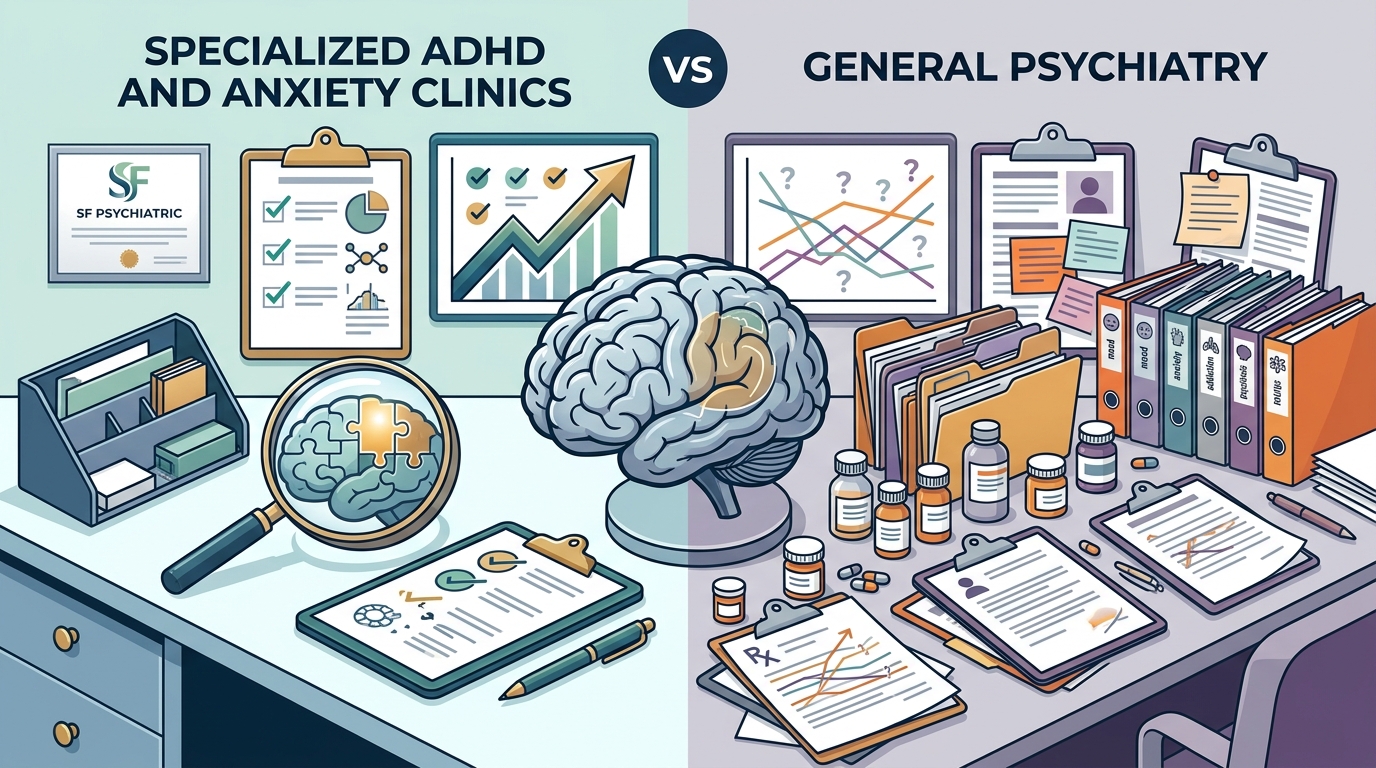
Specialized ADHD and anxiety clinics offer better outcomes because they focus exclusively on neurodevelopmental and mood disorders, providing deeper diagnostic precision and tailored treatment plans. General psychiatry practices often treat a wide variety of conditions, which can lead to less focused care and longer wait times for complex cases. At SF Psychiatric, we prioritize this specialized approach to ensure patients receive expert, efficient, and personalized care for their specific needs.
Diagnostic Precision and Depth
Accurate diagnosis is the foundation of effective treatment. In general psychiatry, clinicians may rely on brief intake forms or standard checklists that fail to capture the nuanced history of ADHD and anxiety. Specialized clinics conduct comprehensive evaluations that explore childhood history, executive function deficits, and comorbid conditions. This depth ensures that treatment targets the root cause rather than just the symptoms.
For example, a patient presenting with anxiety might actually be experiencing secondary anxiety due to untreated ADHD. A generalist might prescribe an SSRI, which could help with mood but leave the underlying attention deficits unaddressed. A specialized provider, however, will identify the ADHD component and design a dual-action plan. This precision prevents the frustration of trial-and-error prescribing that often plagues general practices.
Key Insight: Specialized clinics use detailed diagnostic frameworks that distinguish between primary anxiety disorders and anxiety secondary to neurodevelopmental issues, leading to more accurate and effective treatment strategies.
Treatment Focus and Continuity
General psychiatry practices often operate on a high-volume, low-engagement model. Patients may see a provider for 15 minutes every few months, with little time for detailed discussion or adjustment. Specialized clinics, like SF Psychiatric's ADHD medication management program, prioritize continuity and responsiveness. This means more frequent check-ins, direct communication channels, and a deeper understanding of the patient's daily life.
Continuity of care is critical for conditions like ADHD, where medication adjustments require close monitoring. A specialized clinic can quickly respond to side effects or efficacy changes, whereas a generalist might require weeks to schedule a follow-up. This agility reduces the risk of treatment discontinuation and improves long-term adherence. Patients benefit from a provider who knows their history and can anticipate challenges before they become crises.
Key Insight: Specialized clinics provide higher-frequency, more detailed interactions that allow for rapid medication adjustments and sustained therapeutic relationships, which are essential for managing chronic conditions.
Access to Specialized Resources
Specialized clinics often integrate resources that general practices lack. This includes access to ADHD coaches, cognitive behavioral therapy specialists, and support groups tailored to neurodivergent adults. General psychiatry may refer patients to a generic therapist, who may not have specific training in ADHD or anxiety disorders. Specialized clinics curate a network of providers who understand the unique challenges of these conditions.
For instance, SF Psychiatric's resource hub connects patients with ADHD-focused coaching and peer support groups. These resources provide practical skills for managing executive dysfunction, which medication alone cannot solve. General practices rarely offer this level of integrated support, leaving patients to navigate the complex landscape of mental health services on their own.
Key Insight: Specialized clinics offer integrated access to coaching, therapy, and peer support, creating a holistic care ecosystem that general practices typically do not provide.
Scheduling Flexibility and Patient-Centered Care
Busy professionals often struggle to fit traditional appointment times into their schedules. General psychiatry practices typically operate on rigid 15-minute slots with limited flexibility. Specialized clinics recognize that ADHD and anxiety can make scheduling and punctuality difficult. They offer flexible scheduling, last-minute cancellations without penalty, and direct messaging options.
This patient-centered approach reduces the stress associated with seeking care. At SF Psychiatric, we use technology to streamline administrative processes, allowing providers to focus on clinical care. Patients can schedule, reschedule, or communicate via secure messaging, ensuring that logistical hurdles do not interfere with treatment. This flexibility is a significant advantage over general practices that may penalize late cancellations or require phone calls for simple changes.
Key Insight: Specialized clinics accommodate the unique scheduling challenges of ADHD and anxiety patients, offering flexible, tech-enabled care that reduces friction and improves access.
Key Takeaways
- Specialized clinics provide deeper diagnostic precision, distinguishing between primary and secondary symptoms.
- Continuity of care is higher in specialized settings, with more frequent and detailed provider interactions.
- Access to integrated resources like ADHD coaching and specialized therapy is more common in specialized clinics.
- Scheduling flexibility and direct communication channels are standard in specialized practices, reducing patient stress.
- Specialized providers have deeper expertise in the nuances of ADHD and anxiety, leading to more effective treatment plans.
Frequently Asked Questions
Is specialized ADHD care better than general psychiatry?
Yes, specialized care often leads to better outcomes due to deeper diagnostic precision and focused treatment plans. General psychiatry may lack the specific expertise needed for complex neurodevelopmental cases.
How do specialized clinics handle comorbid anxiety and ADHD?
Specialized clinics are trained to identify and treat comorbid conditions simultaneously. They design integrated plans that address both disorders, rather than treating them in isolation.
Are specialized clinics more expensive?
Specialized clinics may have higher fees due to the depth of care provided. However, the efficiency and effectiveness of treatment can reduce long-term costs associated with trial-and-error prescribing.
Can I switch from a general psychiatrist to a specialized clinic?
Yes, you can transfer your care. It is helpful to bring your medical records and diagnosis history to your new provider to ensure continuity.
What should I look for in a specialized ADHD clinic?
Look for providers with specific training in ADHD, flexible scheduling, and access to integrated resources like coaching or therapy. Check if they offer direct communication channels.