

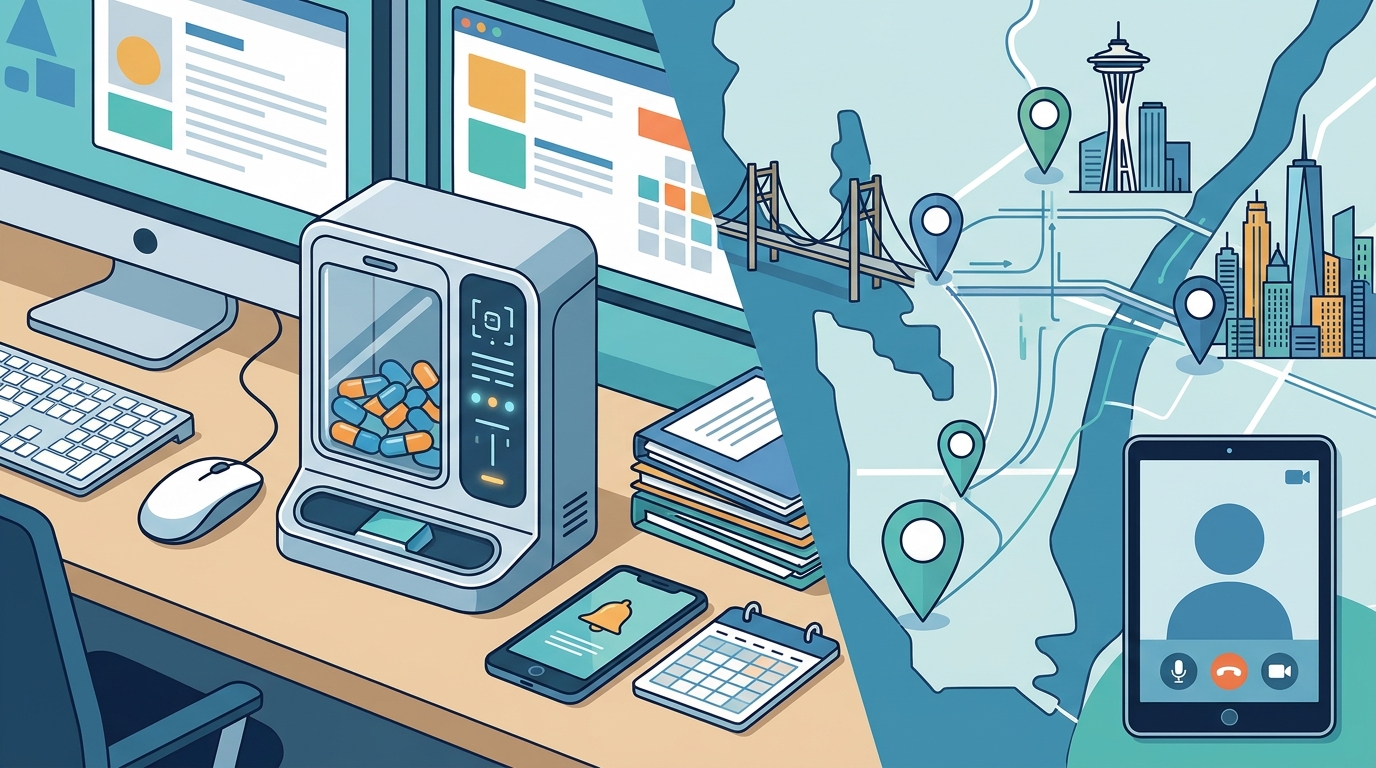
Remote ADHD medication management in 2026 offers a stable, predictable path to symptom control, not a magic cure. For busy professionals, the primary realistic achievement is consistent access to care and a reliable medication supply. This stability allows you to focus on executive functioning and career goals. SF Psychiatric supports this journey by providing flexible, tech-enabled psychiatric care in San Francisco, Seattle, and New York City. The goal is sustainable improvement in daily life, not just a prescription.
The Baseline: What Medication Actually Does
ADHD medication is a tool, not a solution. It is a pharmacological intervention designed to increase dopamine and norepinephrine activity in the prefrontal cortex. This neurochemical shift improves attention, focus, and impulse control. However, it does not teach you how to organize your life. It simply makes your brain more responsive to the strategies you already have. Understanding this distinction is the first step in setting realistic expectations for the year ahead.
Think of medication as a pair of glasses. If you are nearsighted, the glasses help you see the blackboard. They do not teach you the subject. Similarly, stimulants help you see the task at hand, but you still need to know how to break it down. This baseline understanding prevents the common frustration of feeling "fine" on medication but still struggling with productivity. It shifts the focus from "why isn't this working?" to "how do I use this clarity?"
Quarter One: Stabilization and Access
The first three months are about establishing a reliable care loop. The primary milestone is securing a consistent medication supply. Because stimulants are Schedule II controlled substances, supply chains can be fragile. A key achievement in this phase is building a buffer. This means having a small reserve of medication at home to bridge any gaps in pharmacy stock. It also means establishing a single point of contact for your care. Using one prescriber and one pharmacy creates a clean record in prescription monitoring programs. This consistency is the foundation for everything else.
During this quarter, you should also focus on finding the right dose. This is a process of trial and adjustment. It is normal to try a few different strengths or formulations. The goal is not to find the "perfect" dose immediately, but to find a dose that provides enough benefit with manageable side effects. By the end of Quarter One, you should have a stable routine and a clear communication channel with your provider. This stability is the most critical early win.
Quarter Two: Integrating Behavioral Strategies
Once the medication is stable, the focus shifts to behavior. This is where the real work begins. Medication provides the fuel, but you must drive the car. In this phase, you should start implementing one or two specific executive functioning strategies. For example, you might use a digital calendar for all appointments or a task manager for work projects. The key is to pick one thing and master it. Do not try to overhaul your entire life at once. Small, consistent wins build momentum. This phase is about translating the clarity from the medication into tangible habits.
Remote care makes this phase easier because you can discuss these strategies via secure messaging. You do not need a full office visit to ask, "Is this calendar system working for me?" This low-friction communication allows for rapid iteration. You can try a strategy for two weeks, report back, and adjust. This agile approach is a major advantage of telehealth. It turns the treatment plan into a living document that evolves with your life.
Quarter Three: Measuring Functional Gains
By the third quarter, you should be able to measure functional gains. This is not about feeling "normal." It is about specific, observable changes. Can you finish a project on time? Do you lose fewer keys? Are you less irritable in meetings? These are the metrics that matter. You should start tracking these outcomes. Keep a simple log of your wins and struggles. This data is invaluable for your next check-in. It provides concrete evidence of what is working and what is not. It moves the conversation from subjective feelings to objective results.
For many professionals, this is the phase where they realize they have more capacity than they thought. The medication has removed the fog, and the behavioral strategies have provided the structure. The result is a noticeable improvement in work performance and personal relationships. This is the sweet spot of treatment. You are not just managing symptoms; you are leveraging your strengths. This phase is about celebrating progress and identifying new areas for growth.
Quarter Four: Long-Term Sustainability
The final quarter is about planning for the long term. You have established a routine, found a dose, and seen results. Now, you need to ensure this continues. This involves discussing maintenance strategies with your provider. For some, this means continuing the same dose indefinitely. For others, it might involve periodic breaks to prevent tolerance. The goal is a sustainable plan that fits your life. It is not a one-time fix. It is an ongoing partnership. By the end of the year, you should feel confident in your ability to manage your ADHD. You should know what to do when things get tough. This confidence is the ultimate outcome of a year of consistent care.
Key Takeaways
- Medication is a tool that improves neurochemistry, not a cure for executive dysfunction.
- Quarter One is about securing a stable supply and establishing a single point of care.
- Quarter Two focuses on integrating one or two specific behavioral strategies.
- Quarter Three involves tracking functional gains with objective metrics.
- Quarter Four is about creating a sustainable, long-term maintenance plan.
- Remote care enables rapid iteration through secure messaging and flexible scheduling.
Frequently Asked Questions
Is remote ADHD medication management as effective as in-person care?
Yes, for many patients, remote care is equally effective. The key is consistent communication and access. Telehealth removes barriers like travel time and scheduling conflicts. This allows for more frequent check-ins and faster adjustments. The quality of care depends on the provider, not the medium.
How long does it take to find the right medication dose?
It typically takes 4 to 8 weeks to find a stable dose. This involves trying different strengths and formulations. The process is iterative. You and your provider will adjust based on your response and side effects. Patience is key during this phase.
Can I use remote care if I live in a different state?
Yes, if the provider is licensed in your state. SF Psychiatric is licensed in California, New York, and Washington. This means you can receive care in San Francisco, New York City, or Seattle. Always verify your provider's licensing status in your state.
What if my medication is out of stock?
Have a plan. Keep a small buffer of medication at home. If your usual dose is out, ask your provider about alternative strengths or formulations. Do not switch pharmacies frequently, as this can trigger monitoring flags. Consistency is your best defense against supply issues.
Do I need to see a therapist in addition to my psychiatrist?
It is often beneficial. Medication manages symptoms, but therapy addresses underlying patterns. Cognitive Behavioral Therapy (CBT) is particularly effective for ADHD. It helps you develop coping strategies and organizational skills. Combining both approaches often yields the best long-term results.
Start Your Journey with SF Psychiatric
Realistic outcomes are built on consistent, high-quality care. SF Psychiatric provides the structure, flexibility, and expertise you need to achieve your goals. We understand the unique challenges of managing ADHD as a busy professional. Our team is dedicated to helping you find a sustainable path to improved focus and productivity. If you are ready to take the next step, to schedule your initial evaluation.