

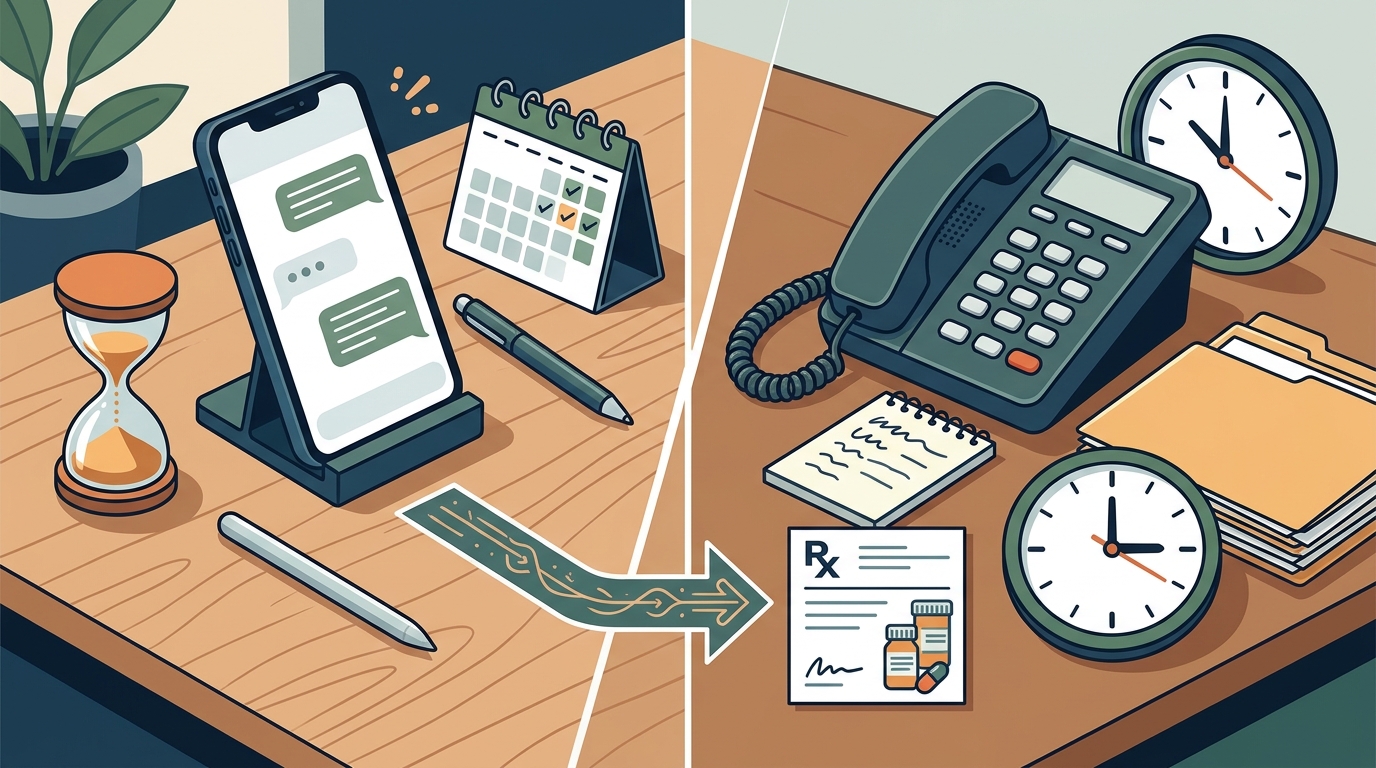
Direct communication with your psychiatrist differs significantly between concierge and traditional ADHD care. In concierge models, providers offer direct messaging and flexible scheduling, allowing patients to resolve medication issues quickly. Traditional care typically relies on scheduled appointments and phone calls, which can delay responses to urgent needs. SF Psychiatric integrates these direct communication tools to support busy professionals managing their ADHD effectively.
The Role of Direct Messaging in Modern Psychiatry
Direct messaging is a secure, HIPAA-compliant channel that allows patients to send non-urgent questions to their provider. In traditional care, this channel is often absent or limited to general office lines. Patients must wait for the next scheduled visit to discuss minor adjustments or side effects. This delay can disrupt treatment stability, especially for those managing controlled substances.
Concierge practices often include direct messaging as a core feature. At SF Psychiatric, we use a HIPAA-compliant Electronic Health System called Theraplatform. This platform provides direct messaging to your provider where your updates can be shared securely. You can report prescription problems or request minor adjustments without booking a full visit. This immediacy helps maintain momentum in your treatment plan.
Scheduling Flexibility and Response Times
Traditional psychiatric care usually operates on fixed appointment slots. If you need to reschedule or cancel, you may face penalties or limited availability. Last-minute changes are often difficult to accommodate. This rigidity can be a barrier for professionals with unpredictable schedules. Missing an appointment due to work conflicts can lead to gaps in care.
Concierge care prioritizes flexibility. SF Psychiatric accommodates last-minute scheduling needs and eliminates unnecessary visits. Our system allows for ease of scheduling, rescheduling, and canceling visits without penalty for last-minute changes. This flexibility ensures that you can see your provider when you need them, not just when the calendar allows. It reduces the friction associated with maintaining consistent care.
Managing Controlled Substances and Urgent Issues
ADHD medication often involves controlled substances, which require careful monitoring. In traditional care, urgent issues with these medications may require waiting for an appointment. This delay can be problematic if you run out of medication or experience adverse effects. The process can feel slow and disconnected from your immediate needs.
Direct communication allows for quicker resolution of these issues. You can message your provider about a shortage or a side effect. The provider can then adjust the prescription or provide guidance promptly. SF Psychiatric uses electronic prescribing through iPrescribe to streamline this process. This eliminates the need for phone tag with pharmacies. It ensures that your medication access remains stable and responsive to your needs.
Administrative Support and Prior Authorizations
Insurance and administrative hurdles can complicate ADHD treatment. In traditional care, patients often handle prior authorizations and insurance questions themselves. This can be time-consuming and confusing. You may need to call multiple parties to resolve a single coverage issue. This administrative burden can detract from your focus on treatment.
Concierge practices often provide dedicated administrative support. SF Psychiatric submits electronic prior authorizations to insurance carriers for medication coverage. We can often secure an approval from insurance the same day a prescription is submitted. We use an application called Cover My Meds, which is also used by major retail pharmacies. This streamlines the medication approval and filling process. You receive support from your care team rather than navigating the system alone.
Building a Sustainable Treatment Relationship
Effective ADHD care requires a long-term relationship with your provider. Traditional care may focus on episodic visits, which can make it hard to build continuity. You may see different providers or have to re-explain your history at each visit. This lack of continuity can impact the quality of care you receive.
Concierge care fosters a deeper, more consistent relationship. The direct communication channels allow for ongoing dialogue between visits. You and your provider can track progress and make adjustments in real-time. SF Psychiatric aims to establish a supportive, consistent, and sustainable treatment relationship. This approach helps you stay on track with your goals. It ensures that your care evolves with your needs over time.
Key Takeaways
- Direct messaging in concierge care allows for secure, non-urgent communication with your provider.
- Traditional care often lacks direct messaging, requiring patients to wait for scheduled appointments.
- Concierge models offer flexible scheduling with no penalties for last-minute changes.
- Electronic prescribing and prior authorization support streamline medication access in concierge care.
- Direct communication helps manage controlled substances more effectively by enabling quick responses.
- Concierge care fosters a sustainable, long-term relationship with your psychiatrist.
- SF Psychiatric integrates these tools to support busy professionals in managing ADHD.
Frequently Asked Questions
What is direct messaging in psychiatric care?
Direct messaging is a secure, HIPAA-compliant channel that allows patients to send non-urgent questions to their provider. It enables quick responses to minor issues without requiring a full appointment. This feature is common in concierge practices.
How does concierge care differ from traditional care in scheduling?
Concierge care offers flexible scheduling with no penalties for last-minute changes. Traditional care typically has fixed slots and may charge for cancellations. This flexibility helps patients maintain consistent care despite busy schedules.
Can I message my psychiatrist about urgent medication issues?
You can use direct messaging for non-urgent questions. For urgent issues, you should contact your provider through the appropriate emergency channel. SF Psychiatric provides direct messaging for reporting prescription problems and minor adjustments.
Does concierge care include administrative support?
Yes, concierge care often includes support for insurance and prior authorizations. SF Psychiatric submits electronic prior authorizations to streamline medication coverage. This reduces the administrative burden on patients.
Is direct messaging available in all psychiatric practices?
No, direct messaging is more common in concierge practices. Traditional practices may rely on phone calls or scheduled visits. The availability of direct messaging depends on the specific practice and its technology infrastructure.
How does SF Psychiatric support direct communication?
SF Psychiatric uses Theraplatform, a HIPAA-compliant Electronic Health System, for direct messaging. This allows patients to share updates and report issues securely. We also use electronic prescribing to streamline medication access.
Start Your Conversation with SF Psychiatric
Direct communication is a key component of effective ADHD care. If you are looking for a provider who offers flexible scheduling and direct messaging, SF Psychiatric is here to help. We provide optimized psychiatric care for busy professionals in San Francisco, Seattle, and New York City. To plan your visit, contact our team. Learn more: ADHD Friendly Psychiatry SF.