

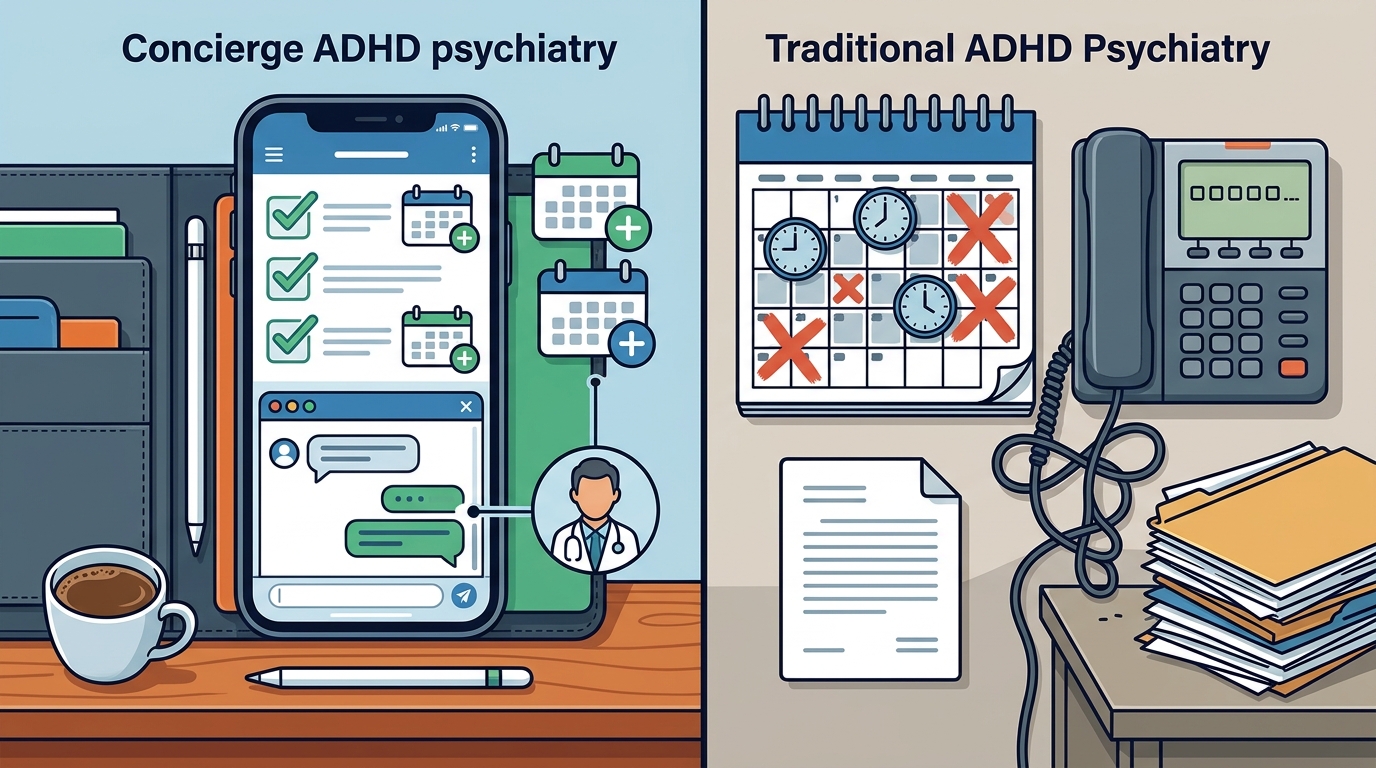
Concierge ADHD psychiatry offers unlimited, penalty-free scheduling and direct messaging, while traditional care relies on fixed monthly visits and rigid phone queues. This structural difference directly impacts how quickly you can resolve medication issues or adjust treatment plans. For busy professionals, this flexibility is often the deciding factor in maintaining consistent care.
The Structural Difference in Appointment Models
Traditional psychiatric care is built around a visit-based model. You book a specific time slot, usually monthly, and pay per visit. If you miss that slot, you often pay a cancellation fee or lose the appointment. Concierge psychiatry replaces this with a subscription model. You pay a flat annual fee, which grants you access to a provider without the constraint of a single, fixed appointment time.
This shift changes the dynamic from "booking a service" to "maintaining a relationship." In a concierge setting, the provider is available to you throughout the year, not just on the day of your scheduled visit. This means that if a new symptom appears or a medication side effect emerges, you do not have to wait weeks for your next monthly check-in. The provider is on call, so to speak, within the bounds of their professional availability.
For individuals with ADHD, who may struggle with the executive function required to manage complex appointment calendars, this model reduces the cognitive load of healthcare management. You do not need to remember to book, reschedule, or cancel. The infrastructure handles the logistics, allowing you to focus on your health.
Direct Communication Channels and Response Times
One of the most significant scheduling differences is the method of communication. Traditional practices typically require you to call a front desk to speak with a nurse or provider. This can lead to long hold times and delayed responses, especially if the provider is in a session. Concierge practices, like SF Psychiatric, often utilize secure, direct messaging platforms. This allows patients to send a text or email directly to their provider.
Direct messaging bypasses the administrative bottleneck. If you have a question about a dosage or a side effect, you can send a message and receive a response within hours or even minutes, depending on the provider's availability. In traditional care, this same question might require a phone call, a voicemail, and a callback that could take days. For ADHD patients who may experience rapid changes in their daily functioning, this speed of response is critical for maintaining stability.
The implication here is that concierge care treats communication as a continuous process rather than a discrete event. You are not just a patient during a 30-minute window; you are a partner in your care throughout the year. This continuous access helps prevent small issues from becoming large crises that require emergency visits or urgent care appointments.
Handling Last-Minute Changes and Urgent Needs
Life is unpredictable, and ADHD can make it even more so. In traditional psychiatry, last-minute cancellations or reschedules are often penalized. You might lose your deposit or face a fee. This creates a barrier to seeking care when you actually need it most. If you have a sudden work crisis or a family emergency, you are forced to choose between paying a fee or missing your appointment.
Concierge plans are designed to absorb this unpredictability. Many concierge providers, including SF Psychiatric, offer flexibility to cancel or reschedule without fees. This removes the financial anxiety associated with changing plans. You can adjust your schedule as your needs change, without worrying about the cost. This is particularly important for busy professionals who may have back-to-back meetings or travel schedules that shift at the last minute.
Furthermore, concierge providers often offer priority access for urgent issues. If you are experiencing a severe side effect or a mental health crisis, you can often reach your provider immediately. In traditional care, you might be directed to an emergency room or a crisis line, which is not the ideal setting for a medication adjustment. Concierge care provides a more nuanced and personalized response to urgent needs.
Impact on Medication Management and Refills
Scheduling flexibility extends beyond appointments to medication management. In traditional care, refills are often tied to your next visit. If your medication runs out before your next appointment, you may have to wait or call for an early refill, which can be a hassle. Concierge care often includes unlimited medication management visits. This means you can check in with your provider as often as you need to, without additional cost.
This is particularly relevant for ADHD medications, which are often controlled substances with strict refill rules. Having a direct line to your provider makes it easier to navigate these rules. You can discuss dosage changes, switch medications, or address supply issues in real-time. SF Psychiatric provides specific guidance on navigating stimulant shortages, which is a common challenge for ADHD patients. This proactive approach to medication management ensures that you are not left without your medication due to a scheduling gap.
The implication is that concierge care provides a safety net for medication continuity. You are less likely to experience gaps in treatment, which can lead to symptom rebound and decreased functioning. This continuity is essential for maintaining the stability that allows you to thrive in your personal and professional life.
Cost Considerations and Value Proposition
For busy professionals, the time saved by avoiding phone queues and the peace of mind of having direct access to a provider can outweigh the cost. Additionally, concierge plans often include services that are not covered by traditional insurance, such as genetic testing or extended consultation times. When you factor in the cost of missed work days, the stress of managing complex healthcare logistics, and the potential for treatment gaps, the value of concierge care becomes clearer.
It is important to note that concierge care is not a replacement for traditional insurance. You still need insurance for other medical needs. However, for ADHD management, the concierge model offers a level of service and flexibility that is difficult to achieve through traditional care alone. SF Psychiatric offers various plan options to accommodate different budgets and needs, making this model accessible to a wider range of patients.
Key Takeaways
- Direct messaging channels in concierge care allow for faster response times compared to traditional phone queues.
- Concierge plans typically offer penalty-free cancellation and rescheduling, reducing financial anxiety.
- Unlimited medication management visits in concierge care help maintain treatment continuity and prevent gaps.
- While concierge care is more expensive, the value lies in the time saved and the peace of mind provided.
- Traditional care is still a viable option for those who prefer insurance-covered visits and do not require frequent adjustments.
- Choosing between the two models depends on your individual needs, budget, and lifestyle.
Frequently Asked Questions
Is concierge psychiatry covered by insurance?
Generally, no. Concierge fees are paid out-of-pocket and are not covered by insurance. However, you can still use your insurance for other medical needs. Some concierge practices accept HSA or FSA cards for payment.
Can I switch from traditional care to concierge care?
Yes, you can. Many patients start with traditional care and switch to concierge care when they need more flexibility or faster access. You can also switch back to traditional care if your needs change.
How quickly can I reach my concierge provider?
This depends on the provider and the practice. Many concierge providers offer same-day or next-day access for urgent issues. Direct messaging responses can often be received within hours.
Do concierge providers offer in-person visits?
Yes, many concierge providers offer both in-person and telehealth visits. You can choose the format that works best for you. Some practices, like SF Psychiatric, have physical offices for in-person consultations.
Is concierge care only for ADHD?
No, concierge care can be used for a variety of mental health conditions, including anxiety, depression, and insomnia. However, many concierge practices specialize in ADHD and other conditions that require frequent medication management.
What happens if I need to cancel my concierge plan?
This depends on the practice's policy. Many concierge plans allow you to cancel at any time, but you may be required to pay for the remainder of the term. Be sure to read the terms and conditions before enrolling.
Choosing the Right Model for Your Needs
The choice between concierge and traditional ADHD psychiatry ultimately depends on your individual needs, budget, and lifestyle. If you value flexibility, direct access, and continuous support, concierge care may be the right choice for you. If you prefer insurance-covered visits and do not require frequent adjustments, traditional care may be sufficient. SF Psychiatric offers a range of options to help you find the right fit for your unique situation. By understanding the differences in scheduling flexibility, you can make an informed decision that supports your long-term mental health and well-being.