

Managing ADHD medications with a private psychiatrist in San Francisco involves navigating strict federal regulations, supply chain challenges, and the need for consistent, high-touch communication. Private practices like SF Psychiatric offer flexible, concierge-style care that prioritizes direct access and rapid response times. This model helps patients maintain stability by reducing administrative friction and ensuring that prescription monitoring requirements are met without disrupting daily life.
The Regulatory Landscape for Controlled Substances
ADHD medications such as Adderall, Vyvanse, Concerta, and Ritalin are classified as Schedule II controlled substances by the Drug Enforcement Administration (DEA). This classification imposes strict rules on prescribing and dispensing, including the prohibition of automatic refills and limits on early fills. Understanding these rules is critical because they directly impact how you access your medication. A private psychiatrist must adhere to these federal standards, which means that the process of obtaining a refill is more structured than for non-controlled medications.
The DEA also sets annual production quotas for these drugs, which can lead to unpredictable supply shortages. When a specific dose or brand is out of stock, the natural reaction might be to call multiple pharmacies or seek a second opinion from another provider. However, this behavior can trigger red flags in prescription drug monitoring programs (PDMPs). These systems log controlled substance fills across providers, and multiple prescribers writing for the same class of medication can lead to reviews or refusals to fill, even when the prescriptions are medically legitimate. Consistency is the key to navigating this landscape.
The Concierge Model and Direct Communication
Traditional visit-based care often fails busy professionals because it requires scheduling appointments for every minor adjustment or refill issue. A concierge psychiatry plan replaces this model with a patient-centered approach that includes unlimited medication management visits. At SF Psychiatric, for example, patients can communicate directly via text, phone, or email. This direct line of communication allows for prompt responses to unexpected issues, such as a pharmacy reporting a shortage or a side effect emerging after a dose change.
This level of access is particularly valuable when dealing with the complexities of controlled substances. Pharmacists and insurers often require quick verification from the prescriber when supply is tight. A private practice that offers priority access can resolve these issues faster than a standard clinic where you might wait days for a callback. The implication is that you spend less time managing the logistics of your care and more time focusing on your professional and personal goals.
Navigating Supply Shortages and Pharmacy Protocols
Supply shortages are a persistent challenge in ADHD medication management. When your usual dose is unavailable, it is essential to work with your pharmacy and prescriber before seeking alternatives elsewhere. A common solution is to adjust the formulation, such as using two 10 mg tablets in place of one 20 mg tablet, or switching to a comparable medication within the same class. For instance, a prescriber might approve a switch from Adderall to Dexedrine if the former is out of stock. Most patients respond well to different formulations within the same class, such as methylphenidates or amphetamines.
It is also advisable to maintain a consistent pick-up schedule, even if you take breaks from your medication. Having a small supply on hand can prevent a gap in treatment if a shortage occurs unexpectedly. Using your insurance company's preferred mail-order pharmacy can also provide a 90-day supply, which offers a buffer against local retail shortages. These strategies require coordination between you, your pharmacist, and your psychiatrist, highlighting the importance of a unified care team.
Telehealth and In-Person Visit Requirements
Telehealth has expanded access to psychiatric care, but it comes with specific considerations for controlled substances. While the DEA has extended temporary telehealth allowances, an in-person visit is often recommended when starting care. Pharmacists frequently ask whether the initial visit was conducted in person or via telehealth, and they may prefer in-person evaluations to assess for signs of misuse or diversion. Some pharmacies have policies that require an in-person visit for new patients starting controlled medications.
For patients in San Francisco, having a local provider with a physical office can simplify this process. SF Psychiatric maintains a professional office in downtown San Francisco, allowing for in-person evaluations when needed. This hybrid approach ensures that you can benefit from the convenience of telehealth for ongoing management while meeting the initial requirements for controlled substance prescriptions. The implication is that you should be prepared to attend at least one in-person visit, especially if you are new to a prescriber or a new pharmacy.
Insurance, Payment, and Administrative Efficiency
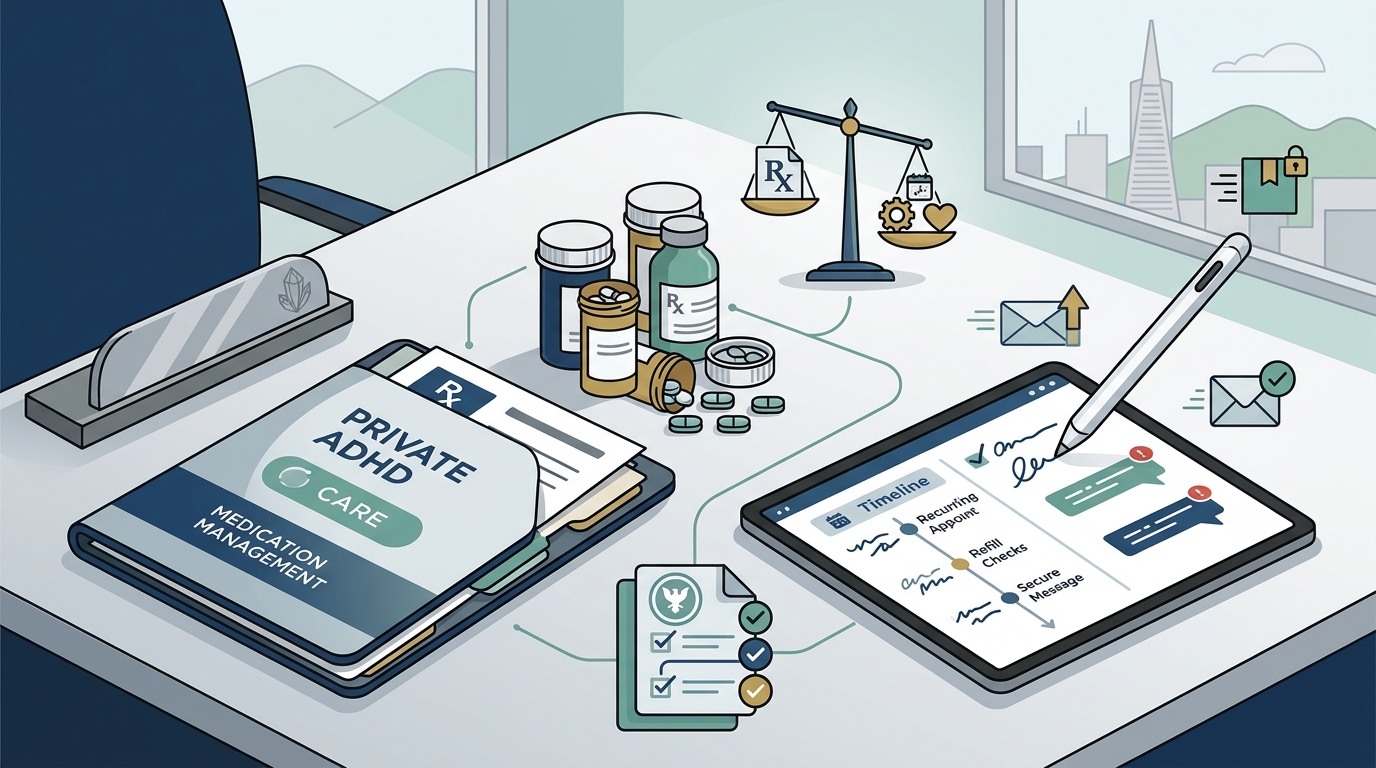
Managing the administrative side of ADHD care can be as challenging as the clinical side. Private practices often accept a limited number of insurance plans or operate on a cash-pay basis. For example, SF Psychiatric accepts Aetna and United plans, as well as HSA and FSA cards. If you are on a stimulant and use insurance, you may be required to attend an appointment for each prescription. This requirement is a regulatory safeguard to ensure that the medication is being used as intended.
Using an HSA or FSA card can be a cost-effective option for those who prefer to pay out-of-pocket. It is important to discuss payment options with your provider before starting care to avoid surprises. Some private practices use electronic prior authorization tools to streamline the insurance approval process, which can result in same-day approvals. This efficiency reduces the time you spend dealing with insurance companies and helps ensure that your medication is available when you need it.
Key Takeaways
- Schedule II status means no automatic refills and strict monitoring of controlled substances.
- Use one prescriber and one pharmacy to avoid triggering red flags in prescription monitoring programs.
- Concierge plans offer direct communication and unlimited visits, reducing administrative friction.
- Work with your pharmacist and prescriber to adjust formulations during supply shortages.
- An in-person visit is often required when starting controlled medications, even in the telehealth era.
- Discuss insurance and payment options upfront to understand the requirements for each prescription.
Frequently Asked Questions
Can I stay on my current ADHD medication if I switch to a private psychiatrist?
Yes, if you have been stable on your regimen, a private psychiatrist can often maintain your current medication. Providing a diagnosis letter or treatment summary from your previous provider helps ensure a smooth transition.
Do I need to come in person for my first visit?
It is recommended to have an initial in-person visit, especially for controlled substances. Pharmacists often prefer in-person evaluations for new patients to assess for signs of misuse.
What happens if my medication is out of stock?
Your prescriber may approve a comparable formulation or a different strength. It is best to contact your pharmacy and prescriber first rather than calling multiple pharmacies.
Does SF Psychiatric accept insurance?
Yes, SF Psychiatric accepts Aetna and United plans. They also accept HSA and FSA cards for out-of-network patients.
How often do I need to see my psychiatrist?
With a concierge plan, you have unlimited medication management visits. For insurance patients on stimulants, an appointment is typically required for each prescription.
Can I use telehealth for all my visits?
Yes, for the remainder of 2026, telehealth is permitted for ongoing care. However, an in-person visit is recommended when starting care for controlled substances.
Conclusion
Managing ADHD medications with a private psychiatrist in San Francisco requires a strategic approach to navigating regulatory requirements and supply chain challenges. By choosing a practice that offers direct communication, flexible scheduling, and a clear understanding of controlled substance protocols, you can maintain stability and focus on your goals. SF Psychiatric provides this level of care, ensuring that you have the support you need to manage your ADHD effectively. To begin your journey, to schedule an evaluation.