

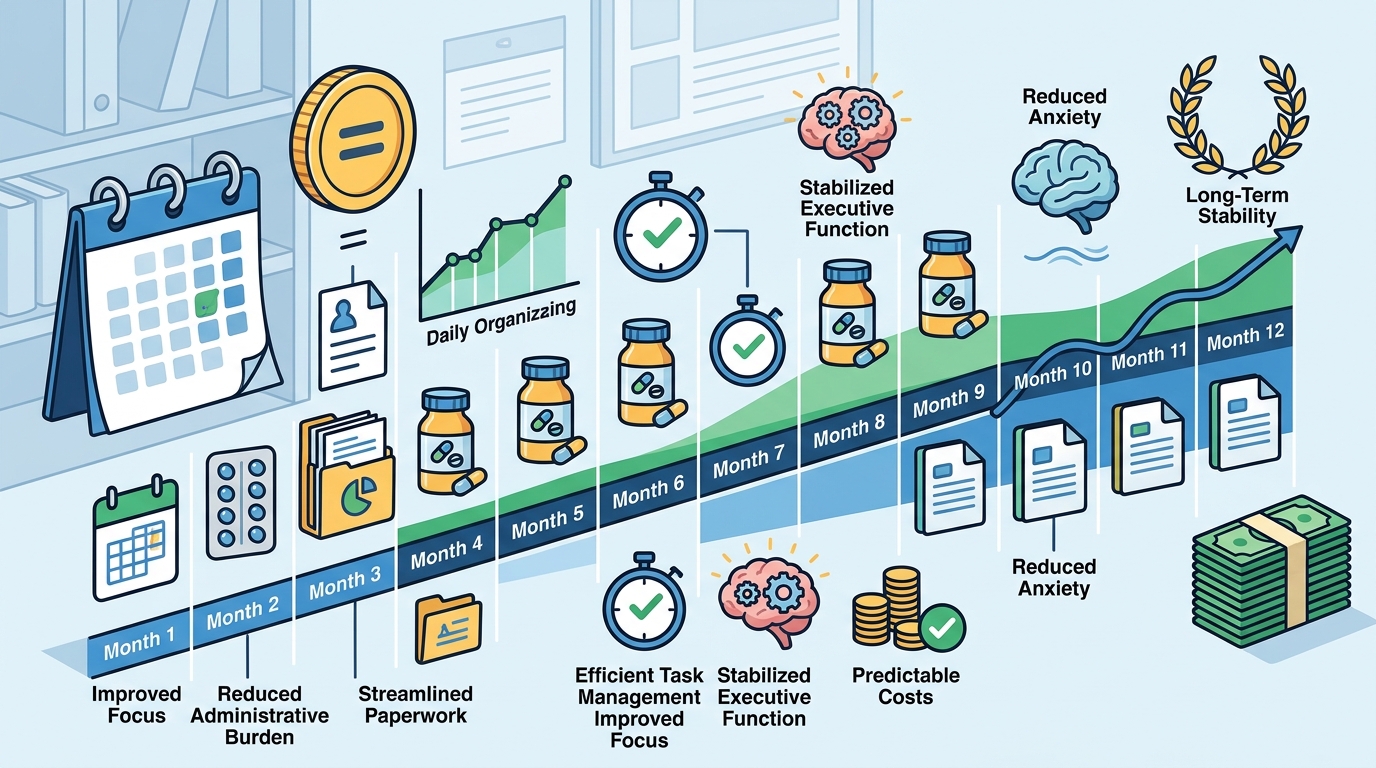
Realistic results from a year of flat-fee ADHD treatment include stabilized executive function, reduced anxiety, and consistent medication access without the stress of unpredictable monthly billing. At SF Psychiatric, this model supports long-term stability by removing financial friction from ongoing care. Patients typically experience improved focus and reduced administrative burden within the first few months.
Financial Predictability and Reduced Administrative Burden
Traditional psychiatric care often involves variable monthly costs that can create financial anxiety for busy professionals. A flat-fee model is a pricing structure that provides a fixed annual cost for comprehensive care, eliminating the need to track individual visit fees. This predictability allows patients to budget their healthcare expenses with confidence. For example, a professional in San Francisco can plan their annual health spending without worrying about unexpected charges for follow-up appointments or medication adjustments.
The reduction in administrative tasks is a significant benefit of this approach. Patients do not need to navigate insurance prior authorizations for every single visit or medication refill. This shift in focus from paperwork to treatment allows individuals to concentrate on their professional and personal goals. The implication is a lower cognitive load, which is particularly valuable for those managing ADHD symptoms.
Medication Stability and Access
Consistent access to medication is a cornerstone of effective ADHD management. Stimulant medications are tightly controlled, and supply shortages can make refills unpredictable. A flat-fee treatment plan is a comprehensive care agreement that ensures ongoing access to necessary medications and adjustments. This stability prevents the gaps in treatment that can lead to symptom flare-ups. For instance, patients can rely on their provider to manage refills and address any side effects promptly, without the interruption of billing disputes.
At SF Psychiatric, we understand the challenges of accessing controlled substances. Our approach includes proactive management of medication access, ensuring that patients remain on their effective regimen. The implication is a more consistent therapeutic effect, which supports long-term progress in managing ADHD symptoms. This stability is crucial for maintaining the gains made during the initial phases of treatment.
Measurable Gains in Executive Function
One of the most significant outcomes of sustained ADHD treatment is the improvement in executive function. Executive function is the set of cognitive processes that helps us plan, focus attention, and remember responsibilities. With consistent medication and support, patients often report better time management and reduced procrastination. A concrete example is the ability to complete complex work projects on time, which was previously a source of significant stress. These improvements are not just subjective; they are often reflected in professional performance and personal satisfaction.
The long-term implication of these gains is a more balanced and productive life. As patients become more adept at managing their symptoms, they can develop coping strategies that complement their medication. This dual approach of pharmacological and behavioral support leads to more durable results. The focus shifts from merely managing symptoms to leveraging one's strengths, which is a key aspect of modern ADHD care.
Integration with Broader Mental Health
ADHD often co-occurs with other mental health conditions, such as anxiety and depression. A flat-fee treatment plan is a holistic care model that addresses these comorbidities alongside ADHD. This integrated approach ensures that all aspects of a patient's mental health are considered in the treatment plan. For example, a patient might find that as their ADHD symptoms improve, their anxiety levels also decrease, leading to an overall improvement in well-being. This comprehensive care is essential for achieving lasting results.
The implication of this integration is a more stable and resilient mental health profile. Patients are better equipped to handle life's challenges when their underlying conditions are managed effectively. This stability supports long-term adherence to treatment and reduces the risk of relapse. By addressing the full spectrum of mental health needs, flat-fee treatment provides a more robust foundation for personal and professional success.
Long-Term Adherence and Support
The implication of long-term adherence is a sustained improvement in quality of life. Patients who remain engaged in their care are more likely to experience lasting benefits. This continuous support also allows for the early detection and management of any emerging issues. By fostering a long-term partnership, flat-fee treatment ensures that patients have the resources they need to thrive. This approach is particularly beneficial for busy professionals who value consistency and reliability in their healthcare.
Key Takeaways
- Flat-fee ADHD treatment provides financial predictability, reducing the stress of variable monthly costs.
- Consistent medication access is a key benefit, preventing gaps in treatment that can lead to symptom flare-ups.
- Measurable improvements in executive function, such as better time management, are common outcomes.
- Integrated care addresses comorbid conditions like anxiety, leading to a more stable mental health profile.
- Long-term adherence is supported by continuous provider engagement and flexible treatment adjustments.
- Reduced administrative burden allows patients to focus on their professional and personal goals.
Frequently Asked Questions
How long does it take to see results from ADHD treatment?
Many patients notice improvements in focus and organization within the first few weeks of starting medication. However, significant gains in executive function and overall well-being often develop over several months as the treatment plan is refined.
Does flat-fee treatment include therapy?
Flat-fee plans typically focus on psychiatric evaluation and medication management. While some plans may include limited therapy sessions, most require separate arrangements for psychotherapy. It is important to clarify what is included in the specific plan.
Can I change my medication if it stops working?
Yes, a key benefit of ongoing care is the ability to adjust your medication as needed. Your provider will monitor your response and make changes to ensure you remain on the most effective regimen.
Is flat-fee treatment covered by insurance?
Flat-fee plans are usually paid out-of-pocket and are not covered by insurance. However, they may be eligible for reimbursement through a Health Savings Account (HSA) or Flexible Spending Account (FSA).
What if I need to travel during my treatment?
Most flat-fee providers offer telehealth options, allowing you to continue your care while traveling. This flexibility ensures that you do not miss important appointments or medication adjustments.
How often will I see my provider?
The frequency of visits depends on your individual needs. Initially, you may have more frequent check-ins, which can taper off as your treatment stabilizes. The flat-fee model allows for this flexibility without additional per-visit costs.