

Phase One: The Initial Adjustment Period
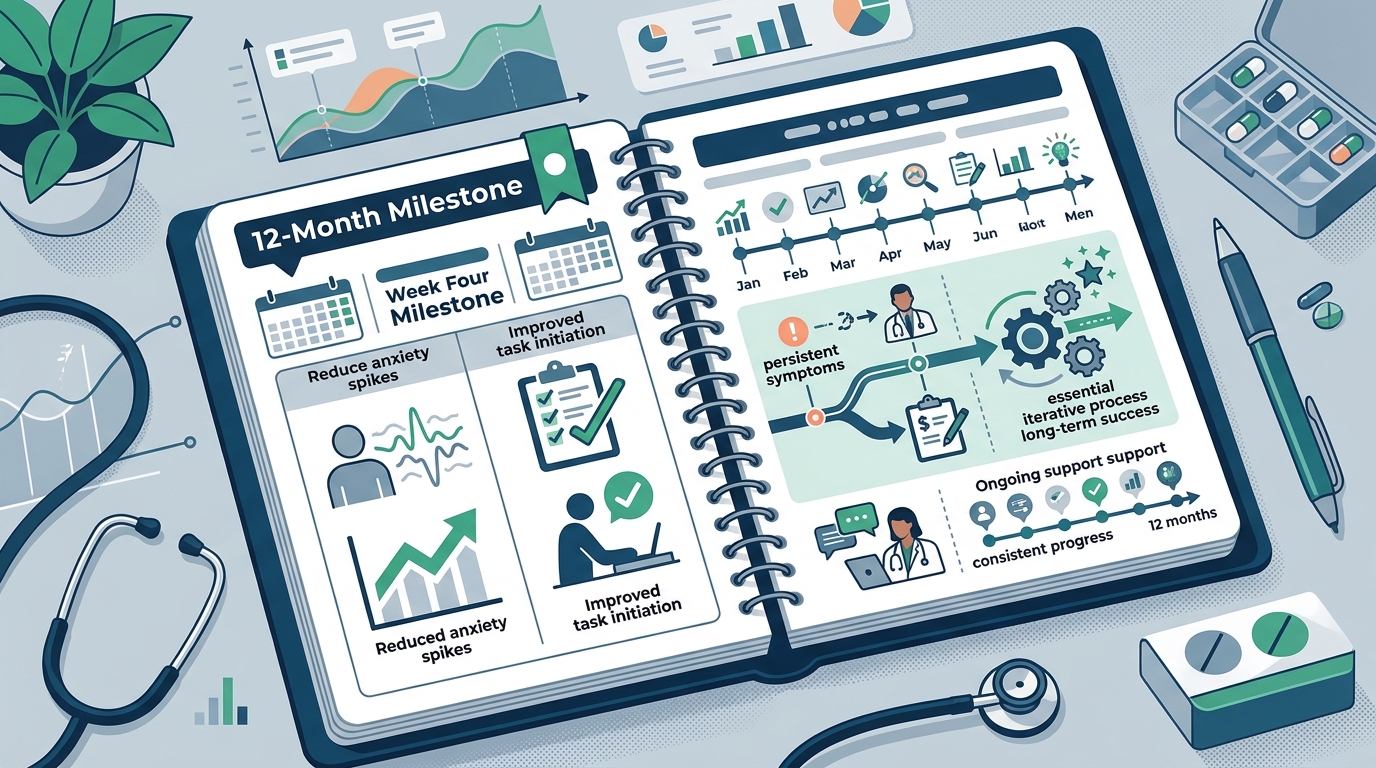
The first few weeks of treatment are often the most challenging. Your brain is adjusting to new chemical inputs, and side effects may appear before benefits become clear. This phase is critical for establishing a baseline. A psychiatrist will monitor your response closely to ensure safety and efficacy. At SF Psychiatric, the initial evaluation is thorough. We assess not just symptoms, but also your history and current stressors. This helps us tailor the starting dose and type of medication. You might experience mild jitteriness or changes in appetite. These are common and usually temporary. The goal is to find a balance where the medication helps without overwhelming your system.Key Milestone: By week four, you should notice a reduction in the intensity of anxiety spikes or a slight improvement in task initiation. If side effects persist or worsen, your provider will adjust the plan. This iterative process is normal and essential for long-term success.
Phase Two: Finding the Optimal Dose
Between months two and four, the focus shifts to optimization. This is where the real work happens. You and your provider will fine-tune the dosage to maximize benefits. For many patients, this involves trying different formulations or adjusting the timing of doses. The aim is to smooth out the peaks and valleys of your day. Anxiety and ADHD often co-occur, creating a complex feedback loop. Treating one condition can sometimes exacerbate the other if not managed carefully. For example, a stimulant might improve focus but increase heart rate, triggering anxiety. A skilled provider will monitor these interactions closely. They may combine a stimulant with a non-stimulant or an SSRI to address both conditions simultaneously.Key Milestone: By month three, you should have a stable regimen. You will likely report fewer missed deadlines and less rumination. The medication should feel like a tool you use, not a crutch you rely on. This stability allows you to build confidence in your ability to manage your life.
Phase Three: Behavioral Integration and Habit Building
Medication is only half the equation. The second half is behavioral change. As your brain chemistry stabilizes, you can more effectively implement coping strategies. This is where therapy, coaching, or lifestyle changes become powerful. You start to build habits that support your new baseline. For professionals, this often means learning to structure their workday. You might use time-blocking techniques or set specific boundaries with colleagues. The medication makes these strategies easier to execute. Without it, the cognitive load of remembering to use them can be too high. With it, they become second nature.Key Milestone: By month six, you should see a clear difference in your professional output. You may take on more complex projects or feel more comfortable in social settings. The anxiety that once held you back is now a manageable background noise. This is a significant shift in your daily experience.
Phase Four: Long-Term Maintenance and Resilience
The final phase of the first year is about maintenance. You are no longer just surviving; you are thriving. The goal is to create a sustainable routine that supports your mental health long-term. This involves regular check-ins with your provider to monitor for any changes in your life or symptoms. Life is dynamic. Stressors change, and so do your needs. A good treatment plan is flexible. It allows for adjustments as you grow. You might need to adjust your dose during high-stress periods or take a break during vacations. Your provider will help you navigate these changes safely.Key Milestone: By month twelve, you should feel a sense of mastery over your condition. You understand your triggers and have tools to manage them. The treatment is no longer a foreign intervention; it is an integrated part of your self-care routine. This resilience is the ultimate goal of long-term care.
Key Takeaways
- Initial adjustments take place in the first four weeks, with side effects often resolving quickly.
- Dose optimization occurs between months two and four, aiming for a stable and effective regimen.
- Behavioral strategies become more effective as medication stabilizes brain chemistry.
- By month six, significant improvements in professional output and social confidence are common.
- Long-term maintenance focuses on resilience and adapting to life changes.
- Regular check-ins are essential to monitor progress and adjust the plan as needed.
- Co-occurring ADHD and anxiety require a nuanced approach to avoid exacerbating symptoms.
Frequently Asked Questions
How long does it take to see results from ADHD medication?
Most patients notice initial improvements within the first few days to two weeks. However, finding the optimal dose and achieving full stabilization can take several months. Consistency is key during this period.
Can anxiety and ADHD be treated with the same medication?
Sometimes, yes. Certain non-stimulant medications can address both conditions. However, stimulants are often used for ADHD, and SSRIs for anxiety. A provider may prescribe a combination to manage both effectively.
What if I don't see results after three months?
If you are not seeing improvements, it is important to discuss this with your provider. They may adjust the dose, try a different medication, or add therapy. It is not uncommon to need to try a few options before finding the right fit.
Do I need to stay on medication forever?
For many people, long-term medication is beneficial. However, some patients may be able to reduce or stop medication after a period of stability. This decision should be made carefully with your provider.
How often should I see my psychiatrist?
Initially, you may see your provider every few weeks to monitor progress. Once stable, visits may become less frequent, such as every three to six months. This schedule can be adjusted based on your needs.
What role does therapy play in treatment?
Therapy helps you develop coping strategies and address underlying issues. It complements medication by providing tools to manage symptoms and improve overall well-being. Many patients find that combining both approaches yields the best results.
Is it safe to take breaks from medication?
Some providers recommend periodic breaks to assess baseline symptoms. This should only be done under medical supervision. Abruptly stopping medication can lead to withdrawal symptoms or a return of symptoms.