

ADHD-Specific Expertise
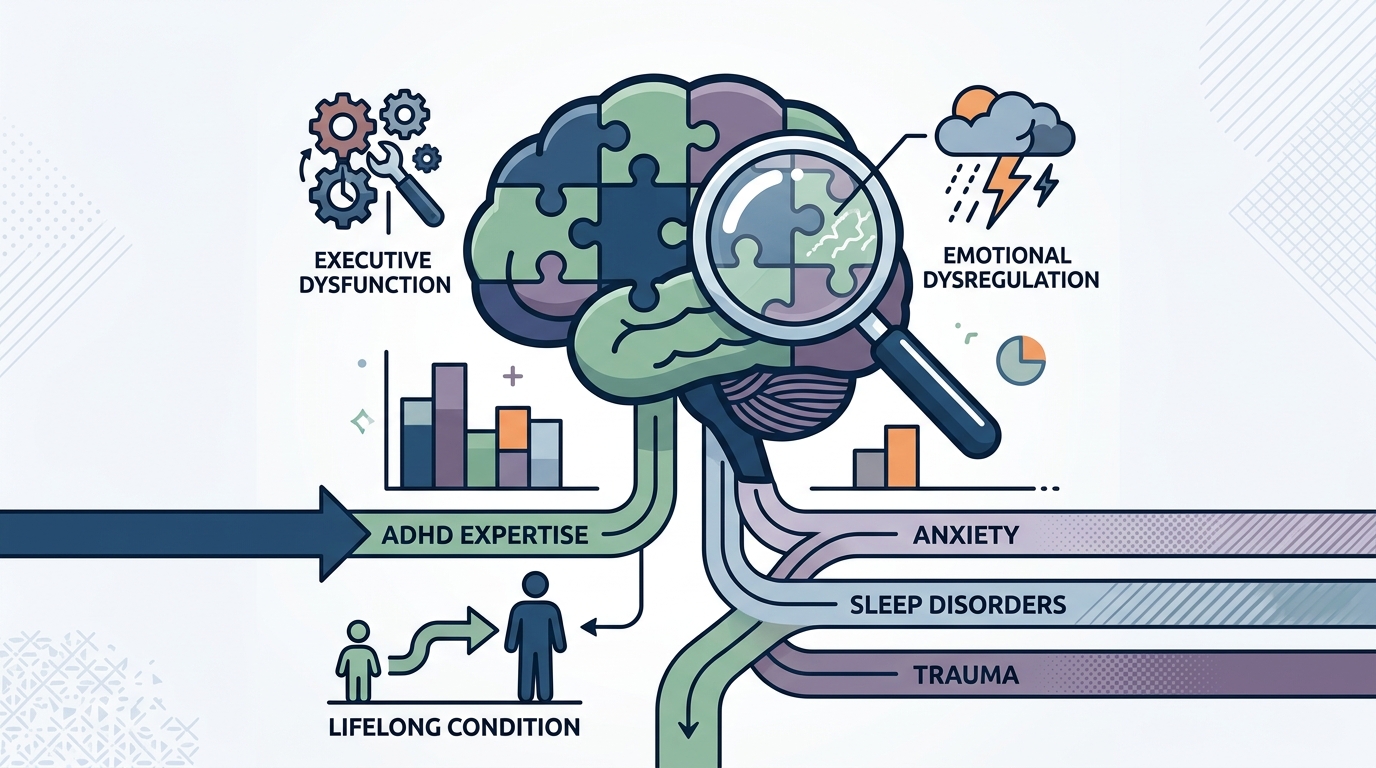
General psychiatry training covers a broad range of mental health conditions, but ADHD requires specialized knowledge of neurodevelopmental disorders. ADHD-specific expertise is the ability to distinguish true attentional deficits from other causes of inattention, such as anxiety, sleep disorders, or trauma. A provider with this expertise understands that ADHD is a lifelong condition that begins in childhood. They are familiar with the specific behavioral markers that persist into adulthood, such as executive dysfunction and emotional dysregulation.
When evaluating a potential provider, look for their specific focus. Does their practice center on adult ADHD, or is it a general psychiatric clinic? Providers who specialize in ADHD are more likely to be familiar with the latest research on neurobiology and treatment protocols. They should be able to explain the difference between the inattentive, hyperactive-impulsive, and combined presentations of the disorder. This foundational knowledge ensures that your diagnosis is accurate and that your treatment plan is tailored to your specific symptom profile rather than a generic template.
Comprehensive Diagnostic Evaluation
A proper diagnosis is the cornerstone of effective treatment. Comprehensive diagnostic evaluation is a multi-step process that includes a detailed clinical interview, review of childhood history, and standardized rating scales. It is not a quick check-in; it is a thorough investigation into your life, work, and family history. A high-quality evaluation will explore your developmental history to confirm that symptoms were present before age 12, as required by diagnostic criteria.
The Role of History and Collateral
Providers should ask about your experiences as a child and as an adult. They may request collateral information from family members or partners to get a multi-perspective view of your symptoms. This helps rule out other conditions that mimic ADHD. For example, anxiety can cause restlessness and difficulty focusing, but the underlying mechanism is different. A comprehensive evaluation differentiates these conditions to ensure you receive the correct treatment.
Psychological Testing Considerations
While psychiatric evaluation is the standard for medication management, some patients require formal psychological testing for workplace or academic accommodations. If you need a diagnosis for legal or professional purposes, such as the bar exam or school accommodations, you should ask if the provider can coordinate with a psychologist for testing. Letters from providers are often deemed inadequate for these specific purposes. A provider who understands this distinction will guide you to the appropriate level of assessment.
Comorbid Condition Management
ADHD rarely exists in isolation. Comorbid condition management is the clinical practice of treating ADHD alongside other co-occurring mental health disorders, such as anxiety, depression, and insomnia. These conditions often exacerbate ADHD symptoms, creating a cycle of dysfunction. A skilled psychiatrist will assess for these co-occurring issues during the initial evaluation and develop an integrated treatment plan.
Managing comorbidities requires a nuanced approach to medication. For instance, a patient with ADHD and severe anxiety may need a non-stimulant medication or a specific combination of agents to avoid worsening anxiety symptoms. The provider must be comfortable navigating these complex interactions. They should be able to explain how your other conditions influence your ADHD treatment and how your ADHD treatment might impact your other conditions. This holistic view is essential for long-term stability and quality of life.
Medication Management Approach
Medication is the most effective treatment for ADHD, but it comes with significant regulatory and logistical challenges. Medication management approach is the ongoing process of prescribing, monitoring, and adjusting psychiatric medications to optimize efficacy and minimize side effects. Because ADHD medications are often Schedule II controlled substances, they are subject to strict regulations, including no automatic refills and potential supply shortages. A provider with a strong medication management approach anticipates these hurdles and has systems in place to mitigate them.
Navigating Supply Shortages
National supply shortages of stimulants like Adderall and Vyvanse are common. A proactive provider will have strategies to keep your medication steady. This might include using electronic prior authorizations to secure insurance approval quickly or suggesting alternative formulations if your specific dose is out of stock. They should advise you on the importance of maintaining a consistent pharmacy and prescriber to avoid triggering red flags in prescription monitoring programs. This stability is crucial for patients who rely on their medication for daily functioning.
Monitoring and Adjustment
Effective management involves regular check-ins to monitor response and side effects. The provider should be accessible for these adjustments, whether through in-person visits or telehealth. They should be willing to try different medications or dosages if the initial choice is not working. This iterative process requires a provider who is committed to your long-term care, not just a one-time prescription. Look for a practice that offers unlimited or frequent medication management visits to ensure you are not left without support when issues arise.
Practical Logistics: Insurance and Telehealth
The practical aspects of care can be just as important as the clinical expertise. Practical logistics encompass insurance acceptance, telehealth availability, and scheduling flexibility. These factors determine whether you can actually access the care you need. A provider who is in-network with your insurance can reduce out-of-pocket costs, but you must verify their specific coverage for controlled substances. Some insurers require in-person visits for every prescription, which can be a barrier for busy professionals.
Telehealth and Regulatory Compliance
Telehealth has expanded access to psychiatric care, but it is subject to evolving regulations. The DEA has extended certain telehealth flexibilities, but rules can change. A provider should be transparent about their telehealth policies and how they comply with current laws. They should also be aware of state-specific regulations, as prescribing controlled substances via telehealth may have different requirements depending on where you live. If you travel frequently or move between cities, ask if the provider is licensed in multiple states to maintain continuity of care.
Scheduling and Communication
Busy professionals need flexibility. Look for a practice that offers last-minute scheduling options and direct communication channels, such as secure messaging or text. This allows you to address urgent issues, such as a medication shortage or a side effect, without waiting weeks for an appointment. A provider who uses modern technology, such as electronic prescribing and secure messaging platforms, can streamline the administrative burden of care. This tech-enabled approach saves you time and reduces the friction of managing your treatment.
Treatment Philosophy Alignment
Your relationship with your psychiatrist is a partnership, and your values should align. Treatment philosophy alignment is the degree to which your personal goals and preferences match the provider's approach to care. Some providers focus exclusively on medication, while others integrate therapy, coaching, or lifestyle changes. You should feel comfortable discussing your goals, whether that is maximizing productivity, managing anxiety, or improving relationships. A provider who listens to your goals and collaborates on a plan is more likely to deliver care that feels right for you.
Consider the provider's stance on non-medication interventions. If you are interested in ADHD coaching or psychotherapy, ask if they can refer you to trusted specialists or if they offer these services in-house. Some practices have a holistic approach that includes genetic testing to identify the best medications for your DNA. This personalized approach can be beneficial for patients who have had mixed responses to standard treatments. Ultimately, you want a provider who respects your autonomy and involves you in decision-making.
Comparison of Care Models
| Feature | Traditional Psychiatry | Concierge/ADHD-Focused Practice |
|---|---|---|
| Scheduling | Fixed appointment slots, often weeks in advance | Flexible, last-minute scheduling, priority access |
| Communication | Phone or portal messages, slower response times | Direct text, email, or secure messaging, rapid response |
| Medication Management | Standard visits, may require in-person for every fill | Unlimited or frequent visits, proactive shortage management |
| Cost Structure | Per-visit insurance billing | Annual membership fee, often HSA/FSA eligible |
| Focus | General mental health | ADHD-specific, tech-enabled, professional-focused |
Key Takeaways
- Verify that the provider has specific expertise in adult ADHD, not just general psychiatry.
- Ensure the diagnostic evaluation is comprehensive, including childhood history and collateral information.
- Ask how the provider manages comorbid conditions like anxiety and depression alongside ADHD.
- Look for a robust medication management approach that addresses supply shortages and regulatory hurdles.
- Check practical logistics, including insurance acceptance, telehealth compliance, and scheduling flexibility.
- Assess treatment philosophy alignment to ensure your goals and the provider's approach match.
- Consider a concierge model if you need unlimited access, direct communication, and proactive support.
- Use a free screening test or initial consult to gauge the provider's communication style and expertise.
Frequently Asked Questions
Do I need a psychologist for an ADHD diagnosis?
For medication management, a psychiatric evaluation is sufficient. However, if you need a diagnosis for workplace or academic accommodations, you may need formal psychological testing. Letters from providers are often deemed inadequate for these specific purposes. Ask your provider if they can coordinate with a psychologist for testing if needed.
Can I stay on my current medication if I switch providers?
Yes, if you have been stable on your regimen, a new provider can often maintain it. You should upload a diagnosis letter or provide the name and website of your former provider to facilitate the transition. This helps the new provider understand your treatment history and ensures continuity of care.
How do I handle medication shortages?
Work with your provider and pharmacy to find alternative strengths or formulations. Avoid calling around to multiple pharmacies, as this can trigger red flags in prescription monitoring programs. A proactive provider will have strategies to keep your medication steady, such as using electronic prior authorizations or suggesting comparable medications.
Is telehealth effective for ADHD care?
Yes, telehealth is effective for ongoing medication management and follow-up visits. However, an initial in-person visit is often recommended to establish a baseline and satisfy pharmacy requirements. Check the provider's telehealth policies and ensure they are compliant with current DEA and state regulations.
What is a concierge psychiatry plan?
A concierge plan is an annual membership that provides unlimited or frequent access to your provider, direct communication, and proactive management of administrative issues. It is designed for busy professionals who need flexibility and rapid response times. These plans are often HSA or FSA eligible.
How often do I need to see my psychiatrist?
For controlled substances, an in-person visit is typically required at the start of care and at least once a year. For ongoing management, you may need visits every few months or as needed for adjustments. A concierge plan may offer unlimited visits, allowing you to address issues as they arise without waiting for a scheduled appointment.
Can I use my HSA card for concierge care?
Yes, many concierge psychiatry plans are HSA and FSA eligible. You should let the provider know you are using your HSA or FSA card when you meet, and they will provide the necessary paperwork. This allows you to use pre-tax funds to pay for your care.
What if I am not sure I want to try medications?
You may be better served by first working with an ADHD-focused psychotherapist or coach. However, you can still meet with a psychiatrist to discuss your options, including non-stimulants and stimulants. They can explain the benefits and risks of each approach and help you make an informed decision.
Conclusion
Choosing the right psychiatrist for ADHD is a critical decision that impacts your daily functioning and long-term well-being. By focusing on specific expertise, comprehensive evaluation, and robust medication management, you can find a provider who will support your goals. SF Psychiatric offers a tech-enabled, ADHD-focused approach that prioritizes flexibility and proactive care for busy professionals. To begin your journey, you can take our free ADHD screening test or to schedule a consult.